




 Global
 United States

 Japan







The medical device industry is undergoing a significant transformation. Advances in embedded computing, artificial intelligence, wireless connectivity, sensing, and cloud technologies are creating a new generation of intelligent and connected medical products.
However, innovation in medical technology is not just about developing smarter devices. It is equally about manufacturing them with consistency, reliability, quality, and the ability to scale.
Medical device manufacturers face a unique set of challenges. Products must meet stringent quality and regulatory requirements, undergo extensive verification and validation, maintain manufacturing traceability, and deliver consistent performance throughout their lifecycle. At the same time, manufacturers must manage increasing product complexity, shorter development cycles, component availability, and growing production demands.
This is driving a shift towards integrated product development and manufacturing models, where engineering, industrialization, quality, automation, and production are closely connected.
The future of medical device manufacturing will therefore be defined by more than technological innovation. It will depend on the ability to take a product from concept to a validated, production-ready solution and manufacture it consistently at scale.
Table of Contents
From Standalone Devices to Connected Medical Ecosystems
Traditional medical devices often operated as independent systems, with data remaining within the device or requiring manual intervention to transfer it elsewhere.
Connected medical devices are changing this model.
Devices can now combine sensors, embedded processing, wireless connectivity, edge intelligence, and cloud platforms to create a continuous flow of information. Patient monitoring systems, diagnostic equipment, wearable devices, connected therapeutic systems, and hospital equipment can communicate with applications and healthcare platforms, enabling better visibility and more efficient workflows.
Connectivity can include technologies such as:
- Wi-Fi and Bluetooth
- Cellular connectivity
- Ethernet
- IoT and edge connectivity
- Secure device-to-cloud communication
- Sensor and peripheral interfaces
This evolution is also influencing manufacturing requirements. Connected medical devices require more sophisticated electronic assemblies, embedded software integration, communication interfaces, and functional testing. Manufacturers must ensure that these components work together reliably, not only during product development but also across every production unit.
Intelligence Moving Closer to the Device
The next evolution in medical technology is intelligence at the edge.
Modern processors and AI-capable compute platforms allow medical devices to perform increasingly sophisticated processing locally. Instead of sending every piece of raw data to the cloud, devices can analyze information closer to where it is generated.
This can enable capabilities such as:
- Real-time signal and sensor processing
- Image and video analysis
- AI-assisted detection and classification
- Predictive monitoring
- Anomaly detection
- Local decision support
- Intelligent device control
For medical device manufacturers, these capabilities introduce additional hardware, software, thermal, power, and integration requirements.
The manufacturing process must accommodate increasingly complex PCB assemblies, processor integration, sensor calibration, connectivity testing, and software loading. Production test strategies also need to evolve to verify both hardware functionality and software performance.
This makes the integration of engineering and manufacturing capabilities increasingly important.
Medical-Grade Manufacturing: Quality, Compliance and Traceability
Unlike conventional consumer electronics, medical devices operate in a highly regulated environment where product quality, safety, and consistency are fundamental requirements.
Manufacturing a medical device involves much more than assembling electronic and mechanical components. It requires controlled processes, documented procedures, risk management, supplier quality controls, inspection, validation, and traceability throughout the product lifecycle.
Several international standards and regulatory frameworks influence medical device development and manufacturing.
- ISO 13485 – Medical Device Quality Management Systems
ISO 13485 establishes quality management system requirements specific to the medical device industry. It provides a framework for controlling design, development, production, installation, and servicing activities while addressing applicable regulatory requirements.
- ISO 14971 – Risk Management for Medical Devices
Risk management is an integral part of medical device development and manufacturing. It involves identifying potential hazards, evaluating associated risks, implementing appropriate controls, and monitoring risks throughout the product lifecycle.
- IEC 60601 – Medical Electrical Equipment
IEC 60601 addresses basic safety and essential performance requirements for applicable medical electrical equipment and systems. These considerations influence product architecture, electrical design, insulation, protection, and verification activities.
- IEC 62304 – Medical Device Software Lifecycle
As software becomes an increasingly important part of medical devices, IEC 62304 provides a framework for medical device software lifecycle processes, including development and maintenance.
The applicable standards and regulatory requirements depend on the device classification, intended use, target markets, and product architecture.
For manufacturers, these requirements translate into several important manufacturing considerations:
- Process control and validation: Establishing controlled and repeatable manufacturing processes.
- Component traceability: Maintaining visibility of components, batches, suppliers, and production records.
- Quality inspection: Implementing incoming, in-process, and final inspection procedures.
- Documentation and configuration control: Maintaining product specifications, process records, engineering changes, and manufacturing documentation.
- Risk-based quality management: Identifying and controlling potential risks across design and production.
- Testing and verification: Ensuring that products meet defined electrical, mechanical, functional, and performance requirements.
Quality cannot be introduced only at the final inspection stage. It needs to be built into the product design, manufacturing processes, and production controls from the beginning.
Advanced Manufacturing and Automation in Medical Devices
As medical devices become more sophisticated, manufacturers are increasingly adopting automation, precision assembly, and intelligent inspection systems to improve production consistency and quality.
Automation can play an important role in reducing manual variability, improving repeatability, and supporting higher production volumes.
Some important areas include:
- Automated Assembly and Precision Manufacturing
Medical devices often involve compact electronic assemblies, precision mechanical components, connectors, sensors, and specialized enclosures. Automated assembly systems can support repeatable operations, controlled component placement, fastening, dispensing, and product handling.
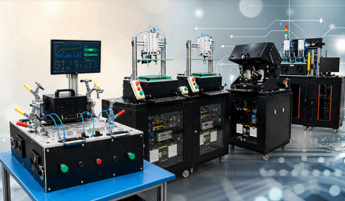
- Automated Test Equipment (ATE)
Testing is a critical part of medical device manufacturing. Depending on the product, automated test systems can be developed to perform:
- PCB and electronic functional testing
- Power and electrical performance testing
- Sensor and signal verification
- Communication and connectivity testing
- End-of-line (EOL) functional testing
- Software loading and configuration verification
- Vision Inspection Systems
Machine vision can support automated inspection of components and finished products. Applications may include PCB inspection, connector verification, component presence and orientation, assembly verification, surface defect detection, and dimensional inspection.
- Production Traceability and Process Monitoring
Digital manufacturing systems can capture production data, inspection results, test reports, and product identification information. This helps manufacturers maintain process visibility and establish traceability across production operations.
Automation is not simply about increasing production speed. In medical device manufacturing, its value lies in improving process consistency, reducing inspection variability, and supporting documented quality controls.
The right level of automation depends on product complexity, production volume, process risk, and regulatory requirements.
Designing for Manufacturing and Scalability
A successful medical device must move beyond engineering validation and become a product that can be manufactured consistently.
This requires manufacturing considerations to be integrated early in the development process.
Design for Manufacturing (DFM) and Design for Assembly (DFA) help ensure that product designs are suitable for efficient and repeatable production. Component selection, PCB architecture, mechanical design, assembly sequences, tooling, testing, and supply-chain availability all influence manufacturing readiness.
A structured industrialization process typically includes:
- Design Transfer: Transitioning the product from engineering development into controlled manufacturing processes.
- Manufacturing Process Development: Defining assembly procedures, production workflows, tooling, and equipment requirements.
- Process Validation: Establishing evidence that applicable manufacturing processes can consistently deliver the intended results.
- Production Testing: Developing functional and end-of-line testing strategies to verify product performance.
- Pilot Builds: Evaluating manufacturing readiness, identifying process gaps, and incorporating corrective actions.
- Volume Manufacturing: Establishing repeatable production processes with appropriate quality controls and traceability.
An integrated approach helps reduce the gap between product engineering and manufacturing, enabling a smoother transition from prototype builds to commercial production.
VVDN: Enabling the Complete Medical Device Product Lifecycle
VVDN brings together product engineering, embedded systems, connectivity, mechanical engineering, testing, automation, and manufacturing capabilities to support medical technology companies across the product lifecycle.
Our approach extends beyond individual engineering activities. It focuses on bringing together design, development, industrialization, manufacturing engineering, testing, and production to help customers take products from concept to scalable manufacturing.
1. Product Design and Engineering
A successful medical device starts with a well-defined product architecture.
VVDN’s engineering capabilities span:
- System architecture and product design
- Hardware and PCB design
- High-speed design and processor integration
- Sensor and connectivity integration
- Embedded firmware and software development
- Mechanical design and enclosure development
- Edge computing and AI/ML integration
By bringing hardware, software, and mechanical engineering together, VVDN can support the development of integrated medical technology products.
2. Design for Manufacturing and Industrialization
Moving from a functional prototype to a production-ready product requires a structured industrialization approach.
VVDN’s capabilities across manufacturing engineering, mechanical design, tooling, and production support can help customers address:
- Design for Manufacturing and Assembly
- PCB assembly optimization
- Mechanical tooling and enclosure development
- Assembly process planning
- Production fixture and test equipment development
- Manufacturing workflow optimization
- Pilot production and production readiness
The objective is to ensure that manufacturability, quality, and scalability are considered early rather than addressed only when production begins.
3. Medical-Grade Quality and Manufacturing Processes
Medical device manufacturing requires disciplined quality management and controlled production processes.
Manufacturing programs need to consider applicable quality management system requirements, risk management, process controls, documentation, supplier management, and product traceability.
VVDN’s integrated engineering and manufacturing model can support customers in addressing manufacturing requirements through:
- Controlled PCBA and product assembly processes
- Manufacturing documentation and process controls
- Incoming and in-process inspection
- Product identification and traceability
- Functional and end-of-line testing
- Quality inspection and production monitoring
- Manufacturing process improvement
These activities can be aligned with the applicable customer quality system and regulatory requirements for the specific product and target market.
4. Automated Testing and Intelligent Inspection
Testing and inspection are essential to ensuring manufacturing consistency.
VVDN develops automated test equipment, functional testers, end-of-line test systems, and machine vision inspection solutions for complex products.
These capabilities can support medical device manufacturing applications such as:
- Automated PCB and electronic functional testing
- Sensor and communication verification
- Product configuration and software validation
- Electrical and performance testing
- Vision-based assembly verification
- Surface and component inspection
- Automated end-of-line testing
By integrating testing and inspection into manufacturing workflows, manufacturers can improve process repeatability and capture objective production data.
5. Manufacturing and Production at Scale
VVDN combines electronics manufacturing, mechanical capabilities, assembly, testing, automation, and manufacturing engineering to support product commercialization.
Capabilities across the manufacturing lifecycle include:
- Printed Circuit Board Assembly (PCBA)
- Product integration and system assembly
- Mechanical and enclosure manufacturing support
- Tooling and production fixtures
- Automated and manual testing
- Production line setup and optimization
- Manufacturing scalability and supply-chain support
This integrated model helps customers work across engineering and manufacturing requirements with fewer handoffs between development and production activities.
The specific manufacturing processes, quality systems, certifications, and facility requirements are established based on the product, customer requirements, and applicable regulatory framework.
Building the Next Generation of Medical Technology
The future of medical device manufacturing will be shaped by the convergence of intelligent electronics, connected systems, AI, embedded software, precision manufacturing, automation, and advanced quality management.
However, the real challenge for medical technology companies is not simply developing innovative products. It is ensuring that those products can be manufactured reliably, meet applicable regulatory requirements, maintain consistent quality, and scale to meet market demand.
This requires a connected approach to the entire product lifecycle, bringing together engineering, industrialization, testing, quality, automation, and manufacturing.
With capabilities spanning product engineering, embedded systems, IoT, mechanical engineering, automated testing, vision inspection, and manufacturing, VVDN aims to support medical technology companies from the initial product concept through industrialization and production at scale.
The next generation of medical devices will be more connected and intelligent. Equally important will be the manufacturing ecosystems that make these products reliable, scalable, and ready for the healthcare industry.