




 Global
  United States
 Japan
Japan 





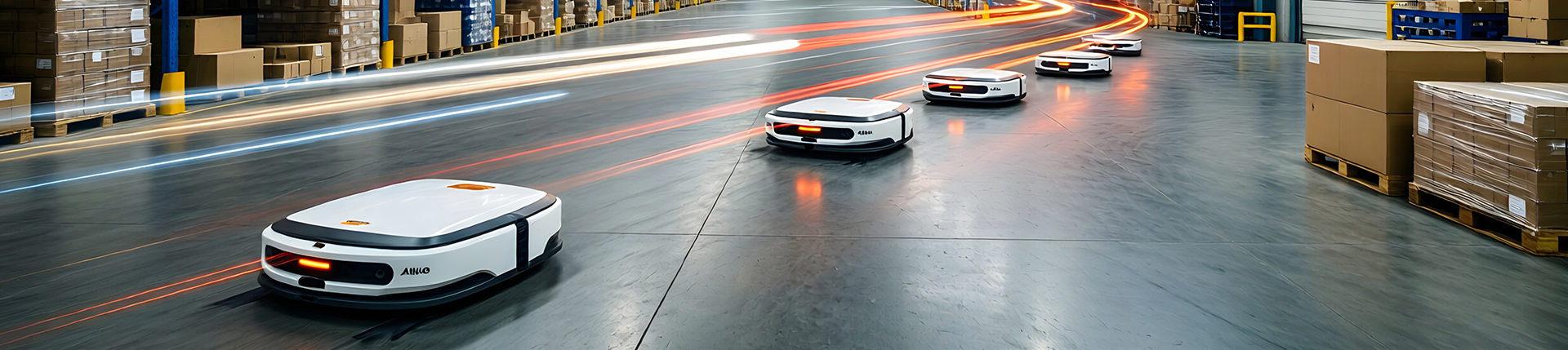
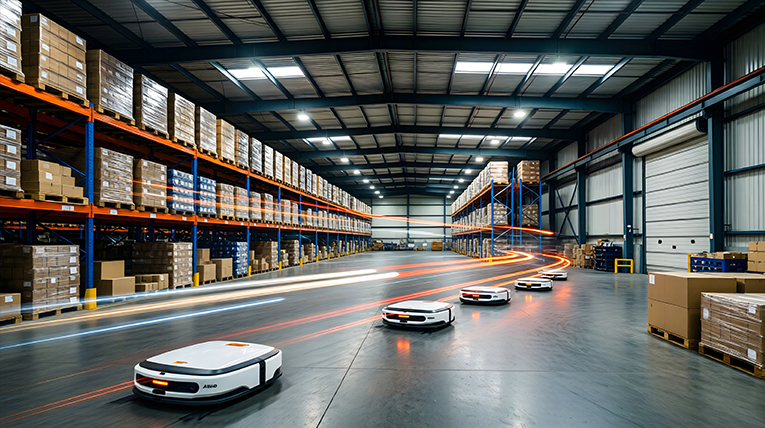
In the era of intelligent automation and Industry 4.0, robotics technology is transforming the way businesses operate across industries such as manufacturing, healthcare, logistics, agriculture, defense and smart infrastructure. By integrating advancements in artificial intelligence (AI), robotics is enabling machines to perform increasingly complex tasks with greater efficiency, precision, and reliability. As organizations continue to embrace automation to enhance productivity and overcome operational challenges, robotics has emerged as a key technology driving innovation and shaping the future of industries worldwide.
Table of Contents
What is Robotics?
Robotics is the field of designing, developing, and programming intelligent machines that can perform tasks autonomously or with minimal human intervention. It brings together mechanical engineering, electronics, embedded systems, AI and software to create automated systems that improve efficiency, accuracy, productivity and operational reliability across a wide range of industries.
At a high level, every robot follows this loop:
Sense → Process → Decide → Act
Core Components of a Robot
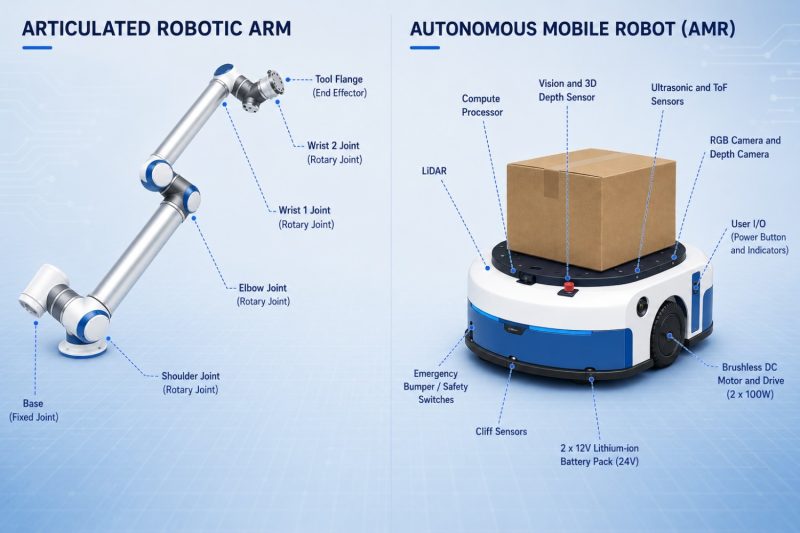
A functional robot typically includes:
- Sensors: Gather data (cameras, LiDAR, IMU, Ultrasonic sensors, Wheel encoders, force sensors, etc.)
- Actuators: Motors, servos, hydraulics that create motion
- Controller: The “brain” (microcontrollers, CPUs, GPUs, NPUs, PLC based controllers)
- Power System: Batteries or external supply
- Software Stack: Algorithms that control behavior
- Mechanical: Chassis, Enclosure, Robotics Arm, Gearboxes & transmission, Mounting structures
Engineering Design of Robots
1. Electronics & Embedded Systems
This layer integrates:
- Custom I/O Design
- Motor Drivers & Control Circuits Integration
- Real-Time Embedded Systems (e.g., using FreeRTOS, Zephyr RTOS)
- Communication Protocols (CAN, UART, USB, Ethernet, I2C, SPI)
2. Software & Intelligence
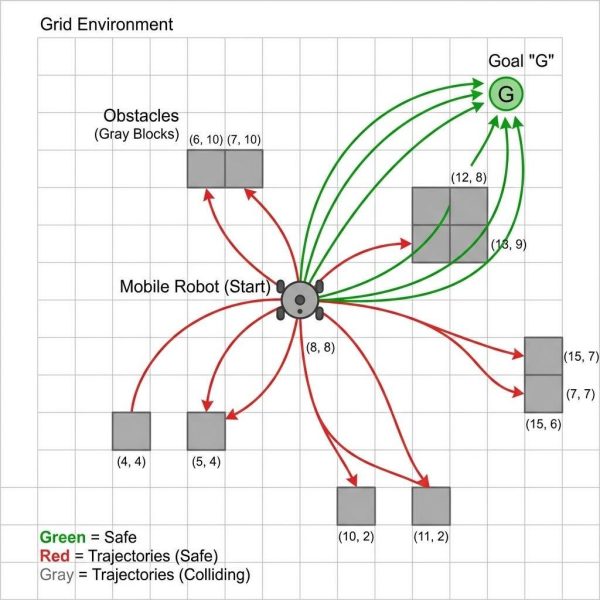
This is where robots become “smart” :
- Perception (computer vision, sensor fusion)
- Localization & Mapping (SLAM)
- Path Planning & Control
- AI/ML Models for Decision-Making Using Frameworks like Robot Operating System (ROS/ROS2) are Widely Used.
3. Mechanical Design
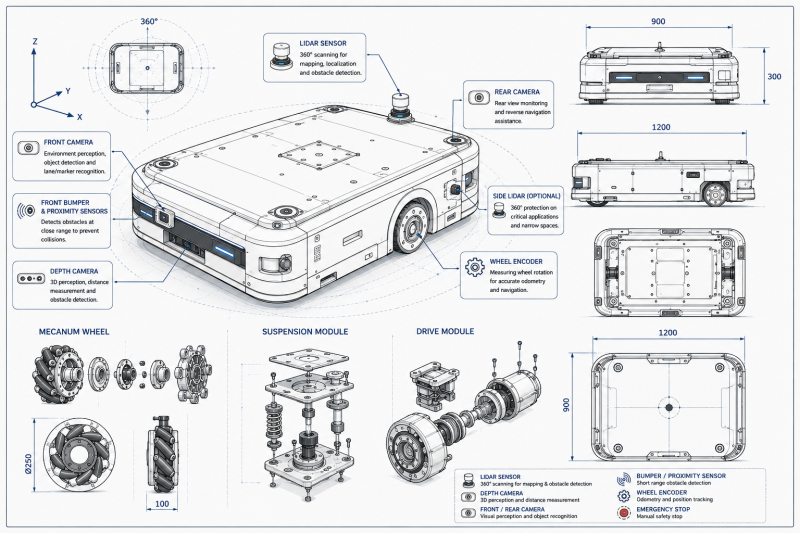
This defines the physical structure:
- Concept Design & CAD
- Mechanical Prototype
- Degrees of Freedom (DOF)
- Kinematics & Dynamics
- Material Selection (weight vs strength)
- End-Effectors (grippers, tools)
Deployment of Robotics Systems
- Industrial Robotics
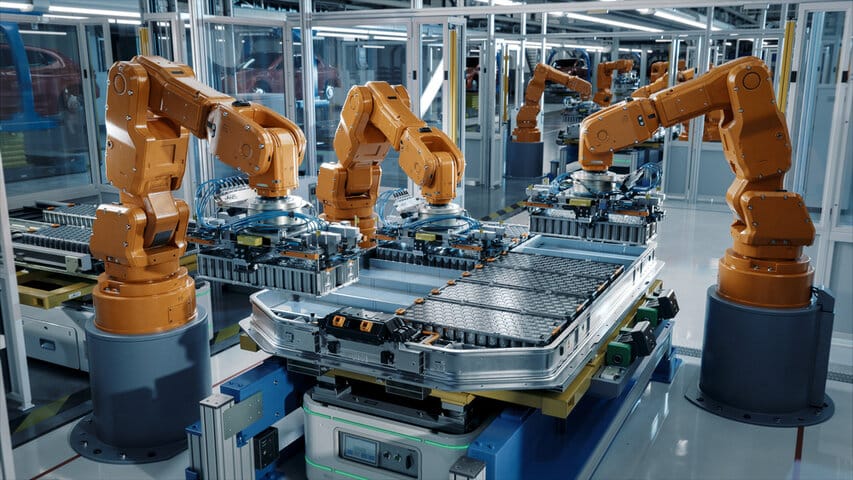
- Assembly Lines (automotive, electronics)
- Welding, Painting, Packaging
- High Precision, Repeatability
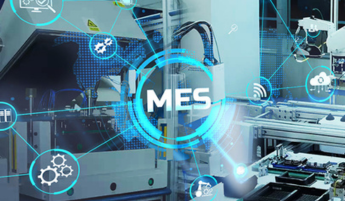
- Integration with MES Systems
- Autonomous & Field Robotics
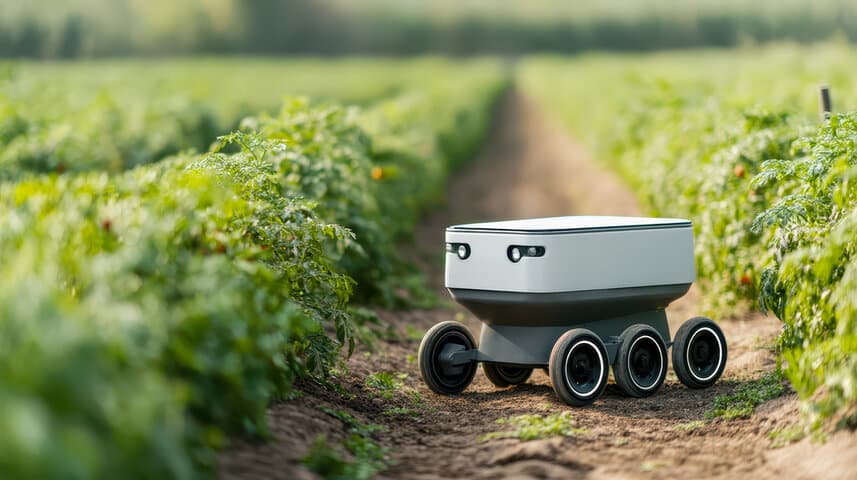
- Self-Driving Vehicles
- Warehouse Robots (AMRs)
- Agricultural Automation
- Service & Human-Centric Robotics
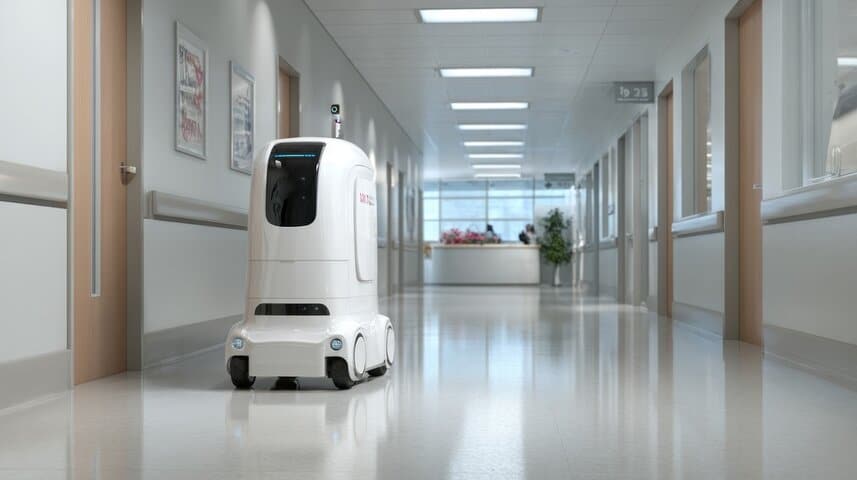
- Healthcare (surgical robots)
- Hospitality & Retail
- Cleaning Robots
- Collaborative Robots (cobots)
Key Challenges in Deployment
Deploying robots in real-world environments involves several challenges:
- Reliability & Safety: Ensuring consistent, safe operation, especially in critical applications such as healthcare, defense and industrial automation.
- Real-Time Performance: Processing sensor data and responding instantly to dynamic situations.
- Unstructured Environments: Adapting to unpredictable conditions, obstacles and changing surroundings.
- Cost & Scalability: Balancing performance and reliability while keeping deployment and manufacturing costs under control.
- Regulatory Compliance: Meeting industry-specific safety ISO 10218 (industrial) and ISO 15066 (cobots), security and certification requirements.
Addressing these challenges is essential for successful and scalable robotics deployment.
Building the Future of Robotics with AMD’s Advanced Compute Platforms
AMD is advancing robotics with its latest AMD Ryzen™ AI Embedded , Kria™ AI, Zynq™ UltraScale+™, AMD Spartan™ UltraScale+™ FPGAs and Versal™ AI Edge platforms, delivering a combination of high-performance CPU, GPU and NPU compute capabilities, AI acceleration, real-time processing, sensor fusion and deterministic control. These chips and adaptive computing platforms are designed to power demanding robotics workloads such as computer vision, perception, autonomous navigation, motion control and edge AI, enabling robots to process data efficiently and make intelligent decisions with low latency.
With this broad portfolio of AMD compute and adaptive computing platforms, VVDN can leverage these technologies to develop next-generation AI-enabled robotics solutions, combining advanced compute with its expertise in hardware design, embedded software, system integration and manufacturing.
How Can VVDN Support You in Robotics Development and Deployment?
With in-house expertise across mechanical, electrical, electronics, and software domains, VVDN delivers end-to-end Robotics Engineering Services spanning embedded hardware, AI-enabled compute platforms, robotics electronics, sensor fusion, vision systems, connectivity, mechanical design and scalable manufacturing. From robotics architecture and custom System-on-Module (SoM) development to Autonomous Mobile Robot (AMR) platforms, autonomous navigation, motor control, intelligent sensing, and production deployment, VVDN enables customers to accelerate product development—from concept and design to manufacturing and deployment in real-world applications.
To learn more about VVDN’s Robotics engineering capabilities, Click here.