




 Global
  United States
 Japan
Japan 





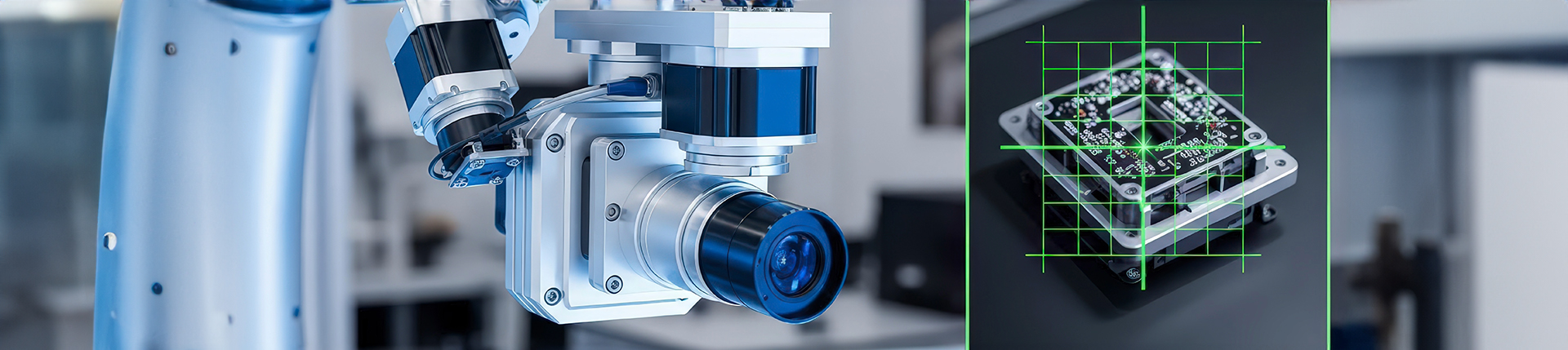
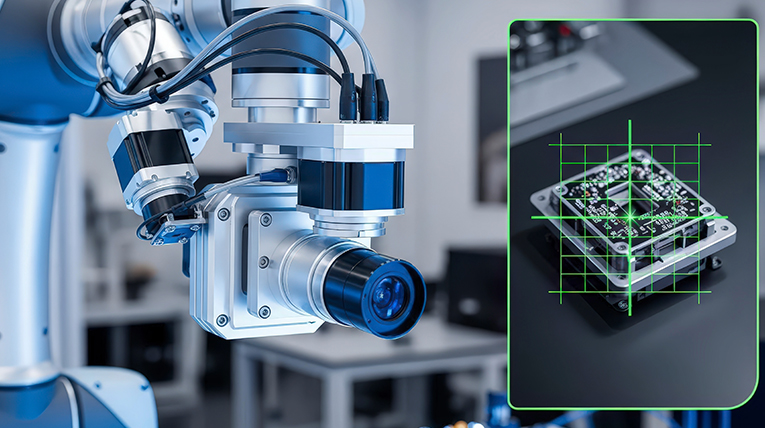
Manufacturing is entering a new era — one where machines no longer just execute instructions but perceive, understand, and act intelligently in the physical world. This transformation is being driven by Vision-Based Automation, a foundational technology enabling the rise of Physical AI across modern factories.
As Industry 4.0 evolves toward autonomous operations, manufacturers are integrating computer vision, edge AI, robotics, and real-time analytics to create production environments that can see, learn, and adapt — much like human operators, but at industrial scale.
Companies that combine computer vision, edge AI, robotics, and real-time analytics are enabling this transition — and VVDN Technologies is playing a key role in this evolution.
In this blog, we deep-dive into vision-based automation, its applications, benefits, and challenges—and how VVDN Technologies enables manufacturers to harness it as a key driver of Physical AI.
Table of Contents
What is Vision-Based Automation?
Vision-based automation integrates computer vision systems into manufacturing processes to perform tasks traditionally dependent on human inspection or manual intervention. These systems use cameras, sensors, and AI-powered algorithms to capture, analyze, and respond to visual information in real time.
More importantly, vision-based automation serves as a critical enabler of Physical AI—where machines go beyond static instructions to dynamically perceive and interact with their physical surroundings.
Unlike conventional automation, which relies on predefined rules, these systems continuously learn and adapt to variations in products, environments, and workflows, making manufacturing systems more intelligent and autonomous.
Core Technologies Enabling Vision-Based Automation
Vision-based automation forms the perception layer of Physical AI. Its adoption is driven by the convergence of AI, edge computing, and embedded systems.
AI & Computer Vision Algorithms
Deep learning models enable classification, anomaly detection, and pattern recognition across complex manufacturing scenarios.
Edge AI Computing
Processing visual data locally ensures low latency, reduced bandwidth usage, and enhanced data security.
Embedded Hardware Platforms
Optimized hardware accelerators enable real-time inference directly within industrial environments.
Systems Integration
Seamless integration with robotics, PLCs, and factory automation platforms allows Physical AI solutions to scale efficiently
Key Applications in Modern Manufacturing
1. Quality Inspection
Manual inspection is often slow and prone to errors. Vision-based automation enables 100% inspection coverage with high precision—forming a core component of Physical AI systems that can “see and decide” in real time.
- Detecting cracks in automotive components
- Identifying misaligned components on PCBs
- Sorting defective products on conveyor lines
By combining visual perception with AI-driven decision-making, manufacturers can ensure consistent product quality at scale.
2.Vision Guided Robotic
One of the most powerful manifestations of Physical AI is the ability of machines to perceive and act simultaneously.
AI Vision systems guide robotic arms with precision, enabling:
- Pick-and-place operations
- Welding and assembly
- Material handling in dynamic environments
With real-time visual feedback, robots can adapt instantly to variations in size, shape, and orientation—bridging the gap between digital intelligence and physical execution on the factory floor.
3. Smart Inventory and Logistics Management
In intelligent factories and warehouses, vision-enabled systems extend Physical AI beyond production lines into logistics and operations.
AI-powered cameras can:
- Track inventory in real time
- Detect misplaced items
- Guide autonomous mobile robots (AMRs)
The result is a responsive and self-regulating logistics ecosystem, reducing manual intervention and improving operational efficiency.
4. Predictive Maintenance Through Visual Intelligence
Vision-based monitoring introduces a predictive approach powered by continuous visual analysis.
AI vision systems can identify early warning signs such as:
- Equipment wear
- Misalignment
- Surface degradation
By analyzing visual data continuously, these systems enable predictive maintenance, minimizing downtime and extending machine life.
Benefits of Vision-Based Automation in a Physical AI ecosystem
- Increased Efficiency: Continuous operation with fewer errors.
- Enhanced Quality Control: Consistent and precise inspection.
- Flexibility: Adaptable to new products or changing production lines.
- Cost Savings: Less scrap, lower labor costs, minimized downtime.
- Data-Driven Insights: Visual data informs process optimization.
Challenges and Considerations
While vision-based automation is a key enabler of Physical AI, there are some challenges as well that manufacturers have to address, including :
- High Initial Investment: Advanced cameras and AI systems can be costly.
- Integration Complexity: Systems must integrate seamlessly with existing machinery.
- Data Processing Requirements: Real-time image analysis demands powerful computing resources.
However, rapid advancements in AI, edge computing, and embedded systems are steadily reducing these barriers, accelerating adoption across industries.
The Future of Manufacturing : Driven by Physical AI
Manufacturing is evolving toward fully autonomous, intelligent ecosystems powered by Physical AI. Vision-based automation will play a central role in this transformation—enabling machines to perceive their environment, make decisions, and execute actions with minimal human input.
Factories of the future will be:
- Self-optimizing
- Adaptive to real-time changes
- Capable of end-to-end automation
Organizations that embrace Physical AI will gain a significant competitive advantage through improved efficiency, superior quality, and faster innovation cycles.
How VVDN Technologies Can Help
VVDN Technologies empowers manufacturers to adopt vision-based automation as a stepping stone toward Physical AI-driven operations.
VVDN offers expertise in:
- AI-enabled camera and smart vision system design
- Edge AI hardware and embedded platform development
- Computer vision software and AI model integration
- High-speed connectivity and industrial networking expertise
From engineering vision-enabled systems for defect detection to delivering end-to-end automation platforms, VVDN enables manufacturers to deploy Physical AI solutions by integrating AI models into robust, production-ready systems that connect perception, intelligent decision-making, and real-world execution.
By partnering with VVDN, manufacturers can accelerate their transition toward fully autonomous, Physical AI-powered production environments—achieving higher precision, reduced downtime, and optimized operations.
For more information on our production automation capabilities, please contact us at: marketing@vvdntech.com