



 Global
 United States

 Japan





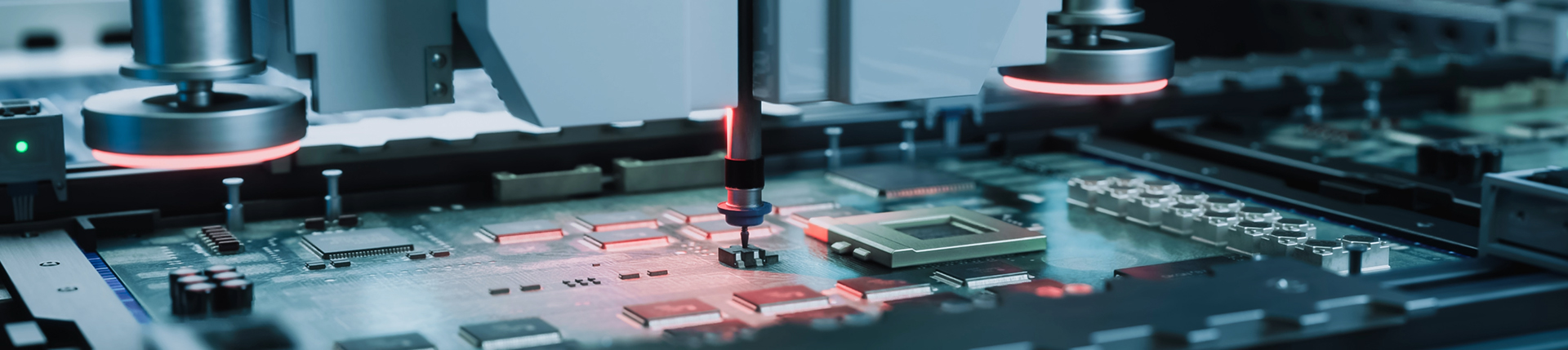
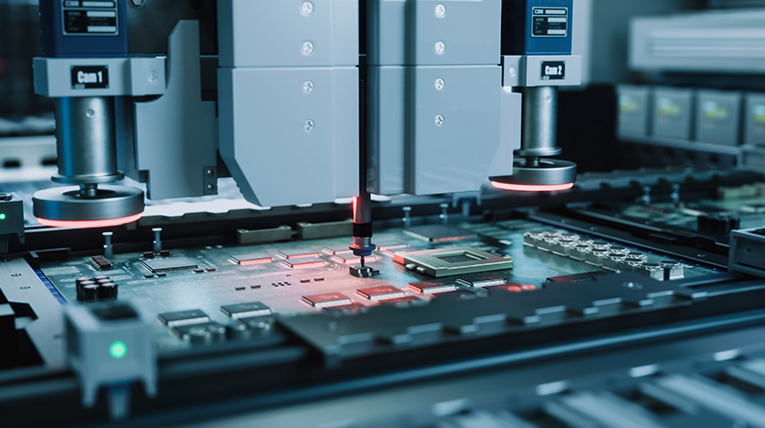
A robot arm reaches into a bin of randomly placed parts, identifies the right component, understands its position and orientation, and picks it up accurately. There is no fixed position for every part and no operator guiding every movement. The system can see what is in front of it and respond accordingly.
This is where Physical AI in manufacturing is changing the way automation works.
Traditional automation is built around fixed rules and predefined sequences. This works well for repetitive and predictable processes. But modern factories often deal with changing product designs, different part positions, defects, and unpredictable conditions. Fixed automation can struggle when the situation is different from what it was programmed to handle.
Physical AI adds intelligence to these physical processes. It combines cameras and sensors, AI, edge computing, robotics, and industrial control systems so machines can understand what is happening and respond to it.
The goal is not to replace traditional automation. It is to make automation more flexible, where machines need to deal with variation and make decisions based on what they see.
Table of Contents
Physical AI vs Traditional Automation
Traditional automation usually follows a predefined sequence. A sensor detects an input, a PLC processes it, and the machine performs the programmed action.
Physical AI adds another layer. Instead of only reacting to a known signal, the system can interpret information from the physical environment.
For example, a traditional system may expect a part to arrive at a fixed position. A Physical AI system can use a camera to identify the part, determine its location and orientation, and provide that information to a robot.
| Traditional Automation | Physical AI |
| Predefined sequences | More flexible decisions |
| Known inputs | Variable physical inputs |
| Fixed responses | Responses based on the situation |
| Fixed positions | Perception-based positioning |
| Limited exception handling | Better handling of variation |
For highly repetitive processes, traditional automation can still be the better choice. Physical AI becomes useful when perception, variation, and real-time decisions are important.
Role of Physical AI in Manufacturing
Physical AI helps manufacturing systems understand their surroundings and respond to changing conditions. It adds perception and flexibility to traditional automation by combining data from cameras, sensors, machines, and production systems.
Its role includes:
- Improving quality: Detecting defects, missing components, and assembly errors.
- Making robots more flexible: Helping robots identify parts and adjust to their position and orientation.
- Supporting adaptive production: Allowing systems to respond to product and process variations.
- Connecting perception with action: Turning AI-based decisions into actions such as rejecting a defective part or adjusting a process.
- Reducing repetitive work: Supporting inspection, sorting, handling, and machine-tending tasks.
Physical AI therefore extends automation where fixed rules alone are not enough.
How Physical AI Works in Manufacturing
A Physical AI system is more than an AI model connected to a robot. It brings several parts of the factory together.
1. The system sees what is happening
Cameras and sensors collect information from the production environment. Depending on the application, this could include 2D cameras, 3D cameras, depth sensors, position sensors, force sensors, temperature sensors, or machine data.
2. AI understands the information
AI models process this data to identify objects, detect defects, estimate position, classify products, or understand how a component is oriented.
For example, on an assembly line, the system may need to confirm which product variant has arrived, whether every component is present, and whether each one is correctly seated.
3. The system decides what to do
Once the environment is understood, the system can determine the next action. It may decide to pick a particular part, reject a defective product, change the robot’s movement, or send an alert to an operator.
4. Industrial systems carry out the action
The AI decision then needs to work with the existing automation system.
A typical setup may involve an edge computer communicating with a PLC or robot controller, which then controls motors, servos, or other equipment.
This connection between AI and industrial control is an important part of Physical AI. An AI model may identify the correct action, but the factory’s control systems still need to execute it safely and accurately.
5. The system checks the result
The process does not end when the machine acts.
Another camera or sensor can check whether the part was placed correctly, whether an assembly was completed, or whether the expected result was achieved.
This creates a feedback loop that allows the system to respond to what happens next.
Key Technologies Behind Physical AI
Computer Vision/ Automated Optical Inspection
Computer vision allows machines to understand images and video. It can be used for inspection, defect detection, component identification, robot guidance, and quality checks.
The right camera and sensing technology depends on the application. Some tasks may need 2D imaging, while others require 3D or depth information.
Edge AI
Physical AI often needs to make decisions quickly. Processing data close to the machine can reduce delays and dependence on remote systems.
Edge platforms must be selected not only for AI performance but also for factors such as latency, power, thermal conditions, and the manufacturing environment.
Robotics and Motion Control
Robots perform the physical work. But connecting an AI decision to a robot requires accurate positioning, calibration, timing, motion control, and safety.
Industrial Connectivity
Physical AI also needs to work with the systems already present in a factory. Cameras, sensors, PLCs, robots, machines, and manufacturing software need to exchange information reliably.
Depending on the application, technologies such as OPC UA, industrial Ethernet, EtherCAT, and APIs can be part of this communication layer.
How Manufacturers Can Start With Physical AI
Manufacturers do not need to make an entire factory autonomous from the beginning. A practical approach is to start with one clearly defined problem.
1. Select the right use case
Look for a process where variation, manual inspection, or repetitive handling creates a measurable problem.
2. Check the existing infrastructure
Review the cameras, sensors, PLCs, robots, networks, machines, and production software already available.
3. Design the system
Select the right combination of sensors, AI models, edge computing, robotics, and control systems based on accuracy, speed, and operating conditions.
4. Connect it to the factory
Integrate the solution with PLCs, robots, MES, and other production systems.
5. Test it in real conditions
Test the complete system under actual lighting, vibration, product variation, production speed, and other factory conditions.
6. Measure the results
Track improvements in cycle time, throughput, quality, defect rates, equipment utilisation, and manual intervention.
Challenges to Consider
Physical AI can deliver significant value, but deploying it in a factory is not simply a matter of installing an AI model.
Manufacturers need to consider:
- Data quality: AI needs representative production data.
- Response time: The complete system must respond within the required production cycle.
- Reliability: AI decisions need to be tested before they control physical equipment.
- Integration: New AI systems need to work with existing machines and control systems.
- Calibration: Cameras, robots, and other equipment must work from accurate physical coordinates.
- Safety: AI-driven systems need clear operating limits and appropriate safety controls.
- Scalability: A successful pilot must also work reliably when deployed across production lines.
The Future of Physical AI in Manufacturing
Physical AI is bringing greater intelligence closer to the machines and processes where manufacturing actually happens.
As sensing, AI, edge computing, robotics, and industrial control become more closely connected, factories can respond more effectively to changing conditions instead of relying entirely on fixed instructions.
The future is not about adding AI to every machine. It is about using AI where it can help machines understand their environment, make better decisions, and carry out physical tasks more effectively.
Build Your Physical AI Future With VVDN
VVDN brings together capabilities in AI and computer vision, embedded systems, edge computing, electronics, industrial connectivity, robotics, and product engineering to help manufacturers build Physical AI solutions for real production environments.
From automated inspection and vision-guided robotic picking to intelligent machine tending and high-speed production systems, VVDN can help connect the different engineering layers required to turn AI-based perception into physical action.
Talk to VVDN about your Physical AI manufacturing use case.