




 Global
  United States
 Japan
Japan 







Table of Contents
How OEMs and Tier-1 Suppliers are Accelerating Software-Defined Vehicle Adoption Through Cost-Optimized CDC Platforms
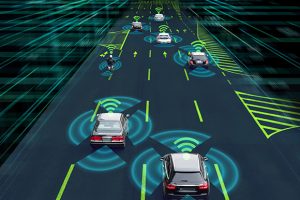
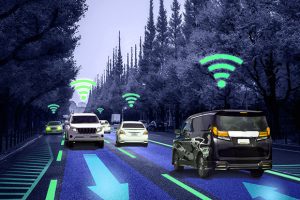
The automotive industry is undergoing a profound transformation as vehicles evolve from hardware-centric machines into software-driven platforms. According to Grand View Research, the global Software-Defined Vehicle (SDV) market was valued at approximately USD 208 billion in 2024 and is projected to grow at a CAGR of over 31% through 2033. At the same time, the connected car market is expected to grow at nearly 13% CAGR through 2030, driven by increasing demand for advanced infotainment, connectivity, and digital cockpit experiences.
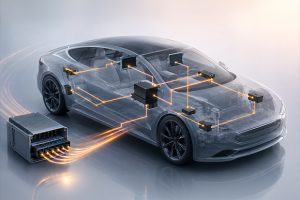
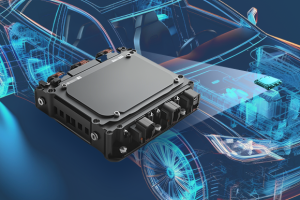
This shift has accelerated the adoption of Cockpit Domain Controllers (CDCs), which consolidate multiple cockpit functions onto a centralized computing platform. Advances in automotive SoCs, virtualization technologies, and software frameworks are making CDCs increasingly cost-effective, enabling OEMs to reduce hardware complexity while delivering feature-rich digital cockpit experiences at scale.
Why Low-Cost CDC Platforms Matter
Conventional cockpit architectures rely on multiple Electronic Control Units (ECUs) to manage infotainment, digital clusters, telematics, connectivity, and display systems. While functionally effective, this distributed architecture increases hardware costs, wiring complexity, software integration effort, and validation time.
By consolidating these functions into a single high-performance computing platform, low-cost CDCs help OEMs:
- Reduce Bill of Materials (BOM) costs
- Minimize ECU count and wiring complexity
- Simplify software integration and maintenance
- Improve platform scalability across vehicle programs
- Accelerate development and production timelines
More importantly, a common CDC platform enables OEMs to deploy differentiated cockpit configurations across multiple vehicle variants using software rather than redesigning hardware for every model.
The Evolution of Modern Cockpit Domain Controllers
Today’s CDCs have evolved beyond infotainment controllers into centralized computing platforms capable of supporting multiple real-time and non-real-time workloads simultaneously.
A modern CDC typically integrates:
- Infotainment and multimedia
- Digital instrument cluster
- Navigation and connected services
- Bluetooth®, Wi-Fi®, and cellular connectivity
- Multi-display Human Machine Interfaces (HMIs)
- Camera visualization systems
- Voice assistants and AI-enabled applications
This level of integration is made possible by multicore automotive processors equipped with GPUs, NPUs, hardware security modules, and virtualization support. Hypervisors allow multiple operating systems such as Android Automotive alongside Linux or QNX to run securely on the same processor while maintaining workload isolation.
AI is also becoming an integral part of cockpit computing. Dedicated NPUs enable features such as natural language voice assistants, driver and occupant monitoring, contextual recommendations, and adaptive user interfaces without significantly increasing CPU utilization.
As centralized architectures continue to evolve, Automotive Ethernet, high-speed camera interfaces, and high-bandwidth display pipelines are becoming essential building blocks for next-generation cockpit platforms.
Engineering Challenges in Developing Affordable CDCs
Designing a cost-optimized CDC involves much more than selecting an automotive SoC. OEMs must carefully balance performance, cost, safety, cybersecurity, thermal constraints, and future software scalability.
Key engineering challenges include:
- Optimizing CPU, GPU, and memory utilization for multiple concurrent applications
- Supporting multiple displays with synchronized graphics rendering
- Reducing boot time for faster system availability
- Managing thermal performance within compact vehicle environments
- Implementing Secure Boot, Hardware Security Modules (HSM), and trusted software updates
- Supporting OTA software upgrades throughout the vehicle lifecycle
- Ensuring compliance with cybersecurity regulations such as UNECE R155/R156 and ISO/SAE 21434
- Simplifying software validation while maintaining functional safety requirements
These challenges require expertise across hardware, embedded software, middleware, operating systems, cybersecurity, system integration, and validation.
How VVDN Enables Cost-Optimized CDC Development
With expertise spanning automotive electronics, embedded software, connectivity, telematics, cloud integration, cybersecurity, and validation, VVDN supports customers throughout the entire product lifecycle, from architecture definition and hardware design to software integration, testing, and production. The company’s experience across Android-based infotainment systems, Linux platforms, digital clusters, telematics control units, connectivity solutions, and cloud-enabled applications enables customers to develop CDC platforms that can be deployed across multiple vehicle segments and global markets.
One of VVDN’s key differentiators is its integrated design-to-manufacturing ecosystem. Hardware design, embedded software, mechanical engineering, validation, reliability testing, and manufacturing are all supported under one roof, enabling faster design iterations and smoother transitions from prototype to mass production.
This integrated approach helps reduce development timelines, improve supply chain efficiency, optimize costs, and accelerate product launches. Additionally, VVDN supports regional localization requirements through language integration, market-specific application enablement, connectivity adaptation, and compliance with local regulations. By combining global engineering expertise with localized development and manufacturing capabilities, VVDN enables OEMs and Tier-1 suppliers to build CDC platforms that meet both regional and global market requirements.
The Road Ahead
As Software-Defined Vehicles become the industry standard, cockpit domain controllers will play a central role in delivering scalable, intelligent, and connected in-vehicle experiences. The focus is no longer on adding more ECUs, but on consolidating functionality into centralized computing platforms that simplify vehicle architectures while enabling continuous software innovation.
For OEMs and Tier-1 suppliers, investing in cost-optimized CDC platforms offers more than reduced hardware costs. It provides a scalable foundation for OTA updates, AI-enabled cockpit experiences, multi-display architectures, connected services, and future software-defined features.
With its expertise in automotive electronics, embedded software, validation, cybersecurity, and manufacturing, VVDN is enabling global OEMs and Tier-1 suppliers to build next-generation cockpit domain controllers that balance performance, cost, scalability, and production readiness accelerating the journey toward software-defined mobility.