






 Global
  United States
 Japan
Japan 





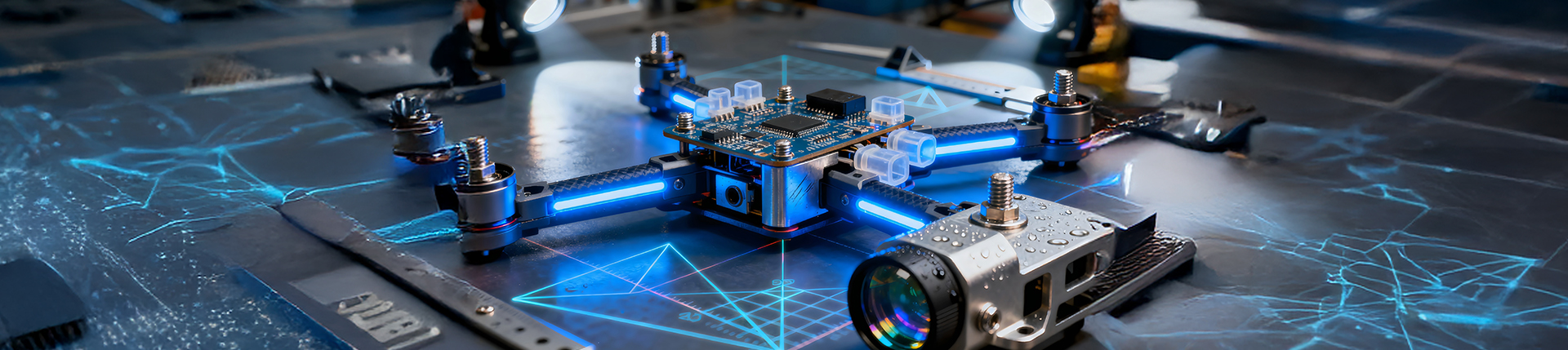
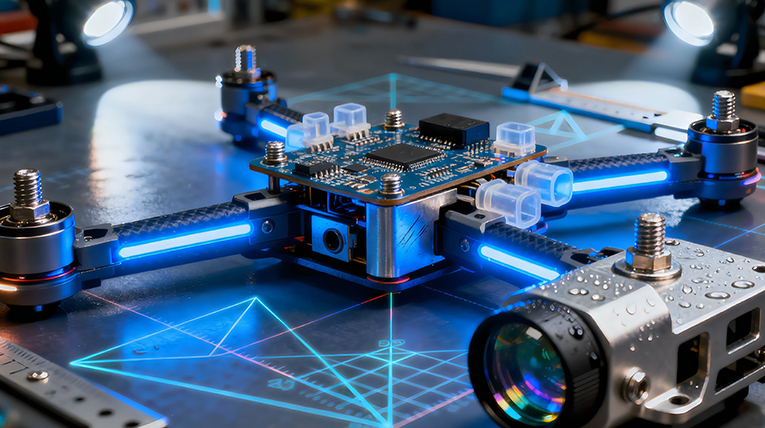
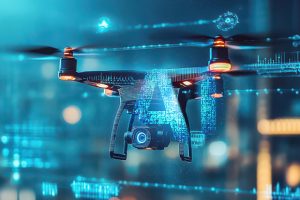
In today’s era of rapid technological advancements, drones are no longer just flying machines. They have evolved into intelligent systems that combine computing, vision, sensors, and connectivity to perform complex tasks. From surveillance and inspection to mapping and autonomous operations, modern drones depend on a well-designed system architecture to deliver reliable performance.
Drones are also playing an increasingly important role in defense and security applications, supporting intelligence, reconnaissance, and situational awareness. This blog explains the fundamentals of drone technology, its system architecture and how VVDN supports end-to-end drone development.
Table of Contents
What Is a Drone?
A drone, also known as an Unmanned Aerial Vehicle (UAV), is an aircraft that operates without an onboard human pilot. Drones may be controlled remotely by an operator or autonomously using onboard computing, sensors and software.
Modern drones are intelligent cyber-physical systems that combine embedded computing, vision, sensing, connectivity, and mechanical design to perform complex tasks with high precision, reliability and efficiency.
Types of Drones
Drones are commonly classified based on their design, capabilities and application areas:
1. Multi-Rotor Drones
- Includes quadcopters, hexacopters and octocopters
- Well-suited for hovering and vertical takeoff and landing
- Commonly used for surveillance, inspection, photography and mapping
2. Fixed-Wing Drones
- Airplane-like structure offering longer endurance
- Suitable for long-range and BVLOS missions
- Used in agriculture, surveying and defense applications
3. Hybrid / VTOL Drones
- Combine vertical takeoff capability with fixed-wing efficiency
- Ideal for long-range missions without runway requirements
- Used in logistics, mapping and industrial inspection
4. Autonomous & AI-Enabled Drones
- Equipped with advanced vision systems and AI algorithms
- Capable of obstacle avoidance, object tracking and autonomous decision-making
- Used in inspection, surveillance and smart city operations
Drone System Architecture
A drone’s system architecture defines how computing, sensing, vision, connectivity, power, and control subsystems work together to enable safe and intelligent flight. Each subsystem is tightly integrated and optimized for weight, power consumption, latency and operational reliability.
1. Compute & Control System
The compute and control system is the central brain of the drone, managing flight stability, mission logic and coordination between all subsystems. It typically combines a real-time flight controller with a high-performance SoC or custom SoM to balance deterministic control with advanced processing capabilities.
Major Components
- Application Processor or Custom SoM
- Real-time Flight Controller (MCU / RTOS)
- Memory (LPDDR, eMMC/UFS)
- Secure Boot and Firmware
2. Vision System
The vision system enables environmental perception for navigation, obstacle avoidance, mapping and surveillance. It integrates multiple cameras with optimized ISP pipelines to deliver reliable, low-latency image data under varying lighting and environmental conditions.
Major Components
- Front, Downward and Stereo Cameras
- Image Sensors and Lenses
- MIPI CSI Interfaces
- ISP and Image Tuning Pipelines
- AI Vision Algorithms
3. Sensors & Navigation System
The sensors and navigation system provides real-time data related to position, orientation and movement. Sensor fusion enables stable flight and accurate navigation, even in GPS-challenged environments.
Major Components
- IMU (accelerometer, gyroscope)
- Magnetometer
- Barometer
- GNSS Modules
- Optional LiDAR, Radar or Ultrasonic Sensors
4. RF & Connectivity System
The RF and connectivity system enables command and control, telemetry exchange, and video transmission between the drone and the ground station. Reliable RF design is critical for range, latency and operational safety.
Major Components
- Wi-Fi or Proprietary RF Modules
- Antennas and RF Front End
- Telemetry Links
- Optional LTE or 5G Modules
5. Power & Propulsion System
The power and propulsion system supplies energy to all subsystems and generates the thrust required for flight. Efficient power design directly impacts flight endurance, payload capacity and thermal performance.
Major Components
- Li-ion or Li-Po Batteries
- Power Management ICs (PMICs)
- ESCs
- Motors and Propellers
- Power Distribution Circuitry
6. Mechanical & Thermal System
The mechanical and thermal system provides structural integrity, vibration isolation and effective heat management. It ensures reliable operation of electronics and cameras under real-world flight conditions.
Major Components
- Lightweight Airframe
- Vibration-damping Mounts
- Heat Sinks and Thermal Materials
- Environmental Enclosures
Key Challenges in Drone Development
Developing a drone involves several engineering challenges that directly impact performance, safety and reliability.
- Lightweight Mechanical Design
Balancing low weight with structural strength, vibration resistance, and durability through optimized materials and mechanical design. - Battery Life & Power Efficiency
Maximizing flight time by optimizing power architecture, component selection, and thermal management. - Vision and Sensor Reliability
Ensuring consistent camera and sensor performance across lighting, weather, and vibration conditions through proper integration, tuning, and calibration. - Software Stability & Safety
Building reliable flight control and autonomy software with robust fail-safe mechanisms and thorough validation. - RF Range and Interference
Achieving long-range, low-latency, and interference-free communication through careful RF design and antenna optimization.
VVDN Advantage: A True End-to-End Partner for Drone Development
What sets VVDN Technologies apart is the ability to deliver complete end-to-end drone development under one roof:
- Compute & Control System – High-performance SoC/SoM integration, flight control, and edge AI processing
- Vision System – Multi-camera design, ISP tuning, AI vision pipelines, and low-latency video streaming
- RF & Connectivity System – RF design, antenna tuning, telemetry, long-range communication, and optional LTE/5G
- Power & Propulsion System – Power management, battery integration, and propulsion optimization for extended flight time
- Mechanical & Thermal System – Rugged mechanical design, weight optimization, and thermal management for airborne platforms
- Manufacturing & Testing – Prototyping, validation, certification support, and mass-production readiness
Whether it’s drone hardware, vision systems, or enabling technologies, VVDN provides end-to-end expertise—from design and engineering to production-ready manufacturing.
Conclusion
Building a reliable and scalable drone requires a strong system architecture, careful engineering, and thorough validation across hardware and software. As drone adoption continues to grow across commercial and defense applications, OEMs need partners who can manage complexity and accelerate development. With deep engineering expertise and end-to-end manufacturing support, VVDN helps drone companies bring high-performance, production-ready drone platforms to market with confidence.
Want to build your next drone solution? Let’s talk.