
 Global
 United States
  Japan
Japan 


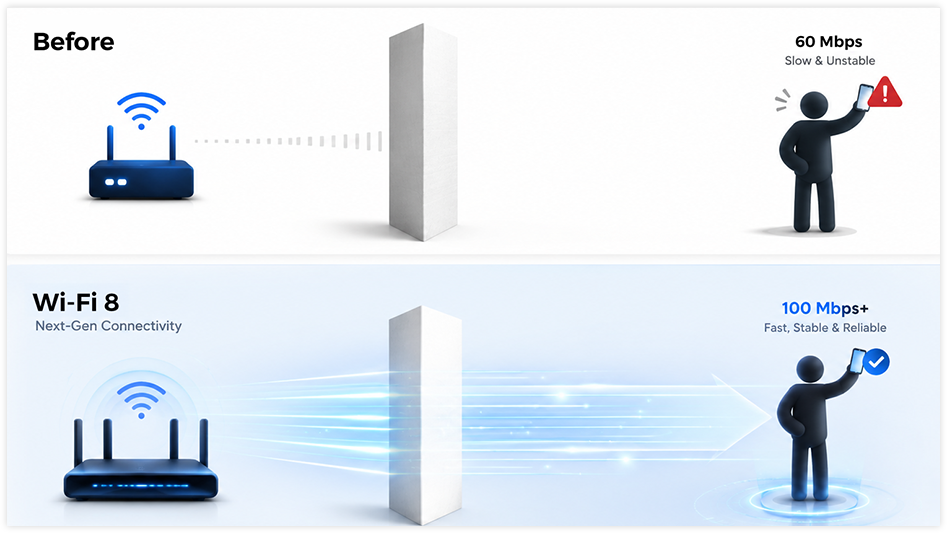
As wireless devices move farther from an access point, maintaining consistent throughput becomes challenging due to signal degradation and interference. Wi-Fi 8 improves performance consistency at medium and long ranges through advanced link adaptation and optimized resource utilization.
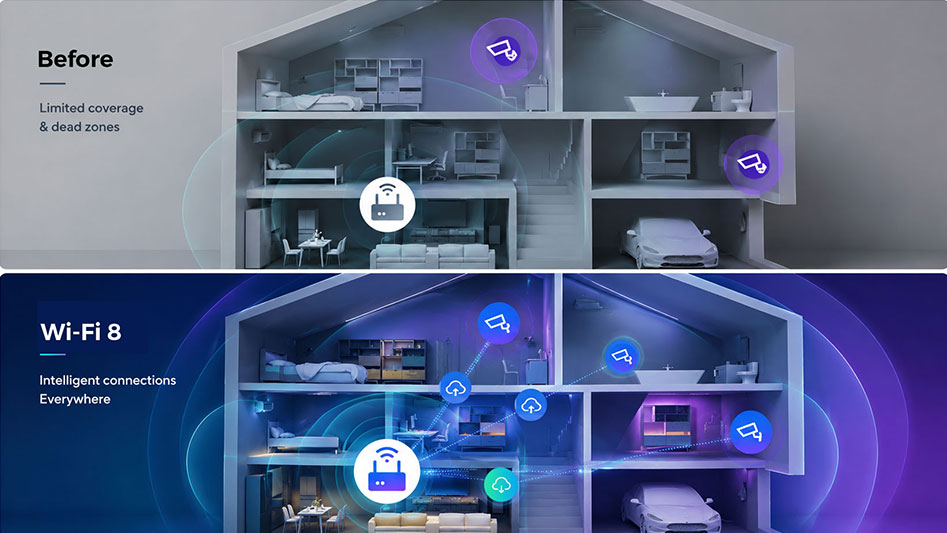
Modern networks include numerous low-power devices that rely on efficient uplink communication. Wi-Fi 8 enhances device-to-AP connectivity by improving resource allocation and maintaining reliable communication even under challenging link conditions.
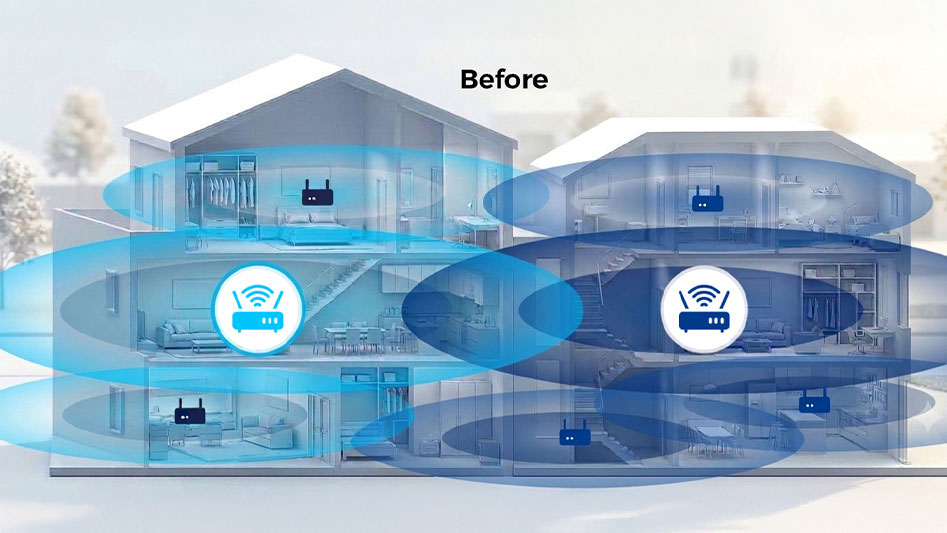
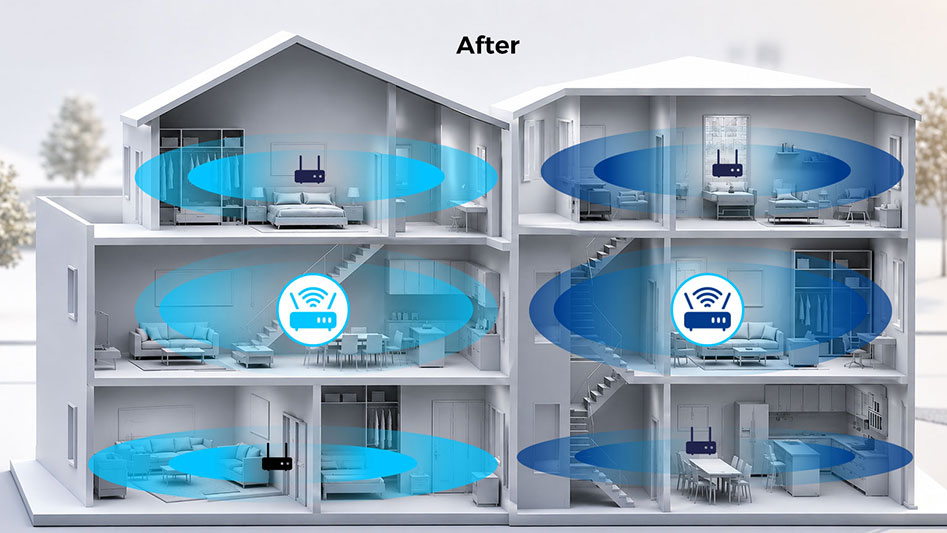
With increasing Wi-Fi deployments in homes, enterprises and public spaces, overlapping networks can impact wireless efficiency. Wi-Fi 8 introduces coordinated AP operation to improve spectrum utilization and minimize interference.
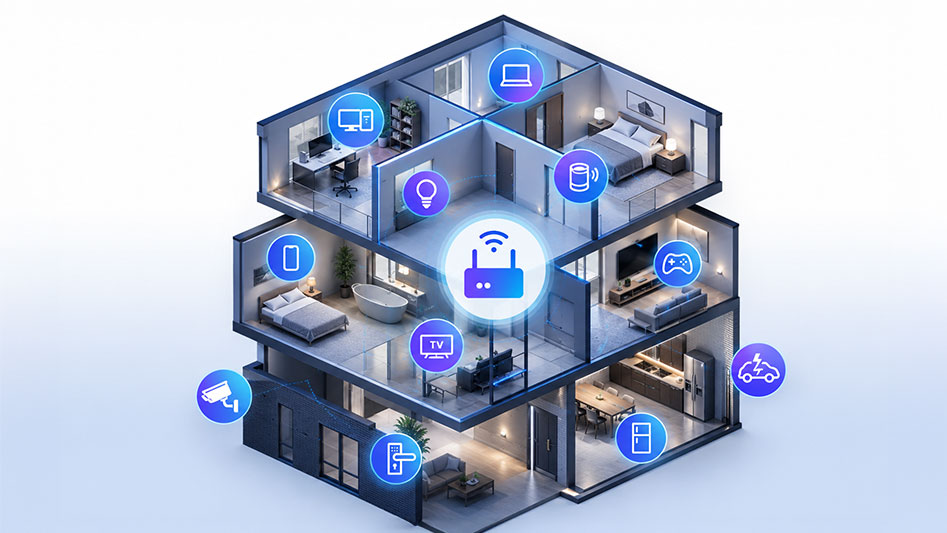
Future networks will support a growing number of connected devices with diverse performance requirements. Wi-Fi 8 improves network efficiency through smarter scheduling, traffic prioritization and dynamic spectrum management.
While Wi-Fi 8 introduces advanced reliability mechanisms, Edge AI adds intelligence by enabling real-time analysis and adaptive network optimization closer to the edge.

Analyzing traffic patterns to optimize resource allocation and ensure smooth performance for critical applications.

Understanding applications needs to dynamically optimize network performance and user experience.

Adapting network resources based on device behavior, requirements and usage patterns.

Detecting anomalies early and enabling smarter decisions for reliable network operations.

Uses intelligent coordination between access points to stop signal collisions in dense workspaces, providing "wired-grade" stability for high-stakes video conferencing.

Guarantees constant uptime for autonomous robots and factory systems by adapting to interference in real-time, preventing costly operational pauses or packet loss.

Leverages advanced scheduling to manage thousands of simultaneous connections in stadiums or airports without the typical signal "crash" or performance degradation.
Prevents neighbor-to-neighbor network interference in crowded apartments, ensuring your Wi-Fi stays fast and uniform regardless of surrounding traffic.
Build the next generation of Wi-Fi 8 access points with VVDN's white-box platform designed for ultra-high reliability. Our customizable hardware, software, and reference designs help OEMs, Telecom Service Providers (TSPs), and ISPs reduce development time, accelerate commercialization and bring differentiated Wi-Fi 8 products to market faster.
Be among the first to deliver wired-grade reliability with VVDN's Wi-Fi 8 roadmap.
We bring to you the views of our thought leaders and technology enthusiasts on upcoming technologies and solutions