





 Global
  United States
 Japan
Japan 


In today’s era of rapid technological advancement, companies are increasingly transitioning from manual processes to automation to enhance quality and productivity.
However, this shift presents its own set of challenges. Manual assembly processes are prone to inefficiencies such as human error, limited production capacity, and longer lead times, which hinder responsiveness to market demands. Additionally, companies require flexible and scalable solutions that can adapt to varying production needs and future technological advancements. Without a structured approach to automation, businesses risk falling behind in competitiveness and struggling to maintain consistent product quality, which can ultimately impact customer satisfaction.
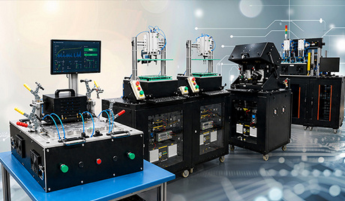
The customer, a leading manufacturer of smart meters, required automation on product assembly lines to meet increasing production demands while improving quality and reducing lead times. The manual process was limiting production capacity and increasing variability in product quality. The customer sought a solution that could:
Transitioning to Automation: Shifting from manual to automated processes requires careful planning and execution.
Designing an Adaptive Layout: Creating a flexible assembly layout to accommodate varying production demands.
Future-Proofing: Developing a solution adaptable to future technological advancements.


