
 Global

 United States
 Japan



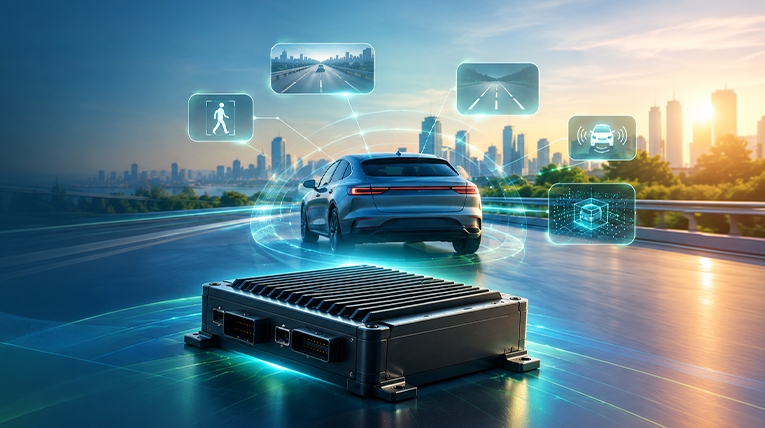
Table of Contents
The Growing Demand for AI-Powered Automotive Computing
The automotive industry is rapidly transitioning toward software-defined vehicles (SDVs), intelligent mobility, and advanced driver assistance systems (ADAS). As automakers integrate AI-driven features such as real-time object detection, driver monitoring, intelligent in-cabin experiences, and predictive maintenance, the demand for high-performance computing platforms inside vehicles continues to grow.
The automotive software and electronics market is expanding alongside this transformation. According to McKinsey’s automotive software and electronics market analysis, the market could grow from approximately $336 billion in 2025 to $519 billion by 2035. This growth reflects the increasing importance of software, computing hardware, connectivity, and intelligent vehicle functions.
Traditional automotive electronic control units (ECUs) continue to perform essential vehicle control tasks. However, AI-driven applications require substantial processing power, memory bandwidth, and the ability to handle complex sensor data in real time. This has created a growing need for dedicated edge computing platforms capable of executing AI workloads directly inside vehicles.
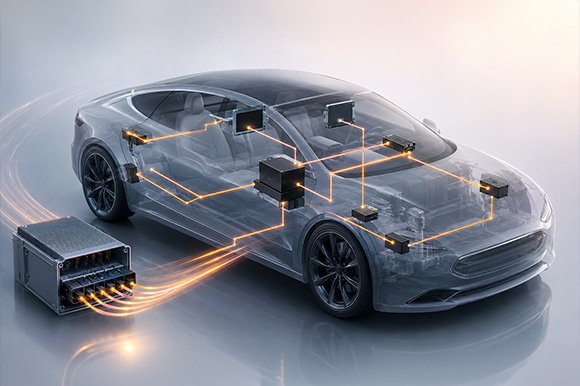
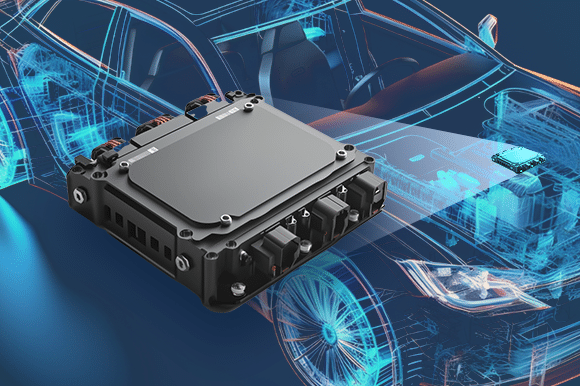
An automotive AI Box addresses this requirement by combining high-performance computing, AI acceleration, connectivity, and embedded software into a compact platform. It enables vehicles to process sensor data locally, run AI inference, and support intelligent applications with reduced dependence on cloud connectivity.
As automotive architectures evolve, AI Boxes are becoming an important component in enabling smarter, more responsive, and scalable vehicle systems.
What is an Automotive AI Box?
An automotive AI Box is an embedded computing platform designed to execute artificial intelligence and machine learning workloads within a vehicle. It typically integrates a high-performance System-on-Chip (SoC), CPU, GPU and/or Neural Processing Unit (NPU), memory, storage, connectivity interfaces, and software components required for AI deployment.
Unlike conventional computing platforms designed primarily for general-purpose processing, an AI Box is optimised to handle computationally intensive workloads such as image recognition, video analytics, sensor data processing, and neural network inference.
Depending on its configuration, an AI Box can connect to cameras, radar systems, vehicle networks, and other sensors to collect and process data locally. This edge-based architecture helps reduce data transmission requirements, improve response times for supported applications, and maintain certain AI functions when cloud connectivity is unavailable.
The platform can also support software updates and AI model improvements throughout the vehicle lifecycle, subject to the hardware, software architecture, and update mechanisms implemented.
Key Technical Capabilities of an Automotive AI Box
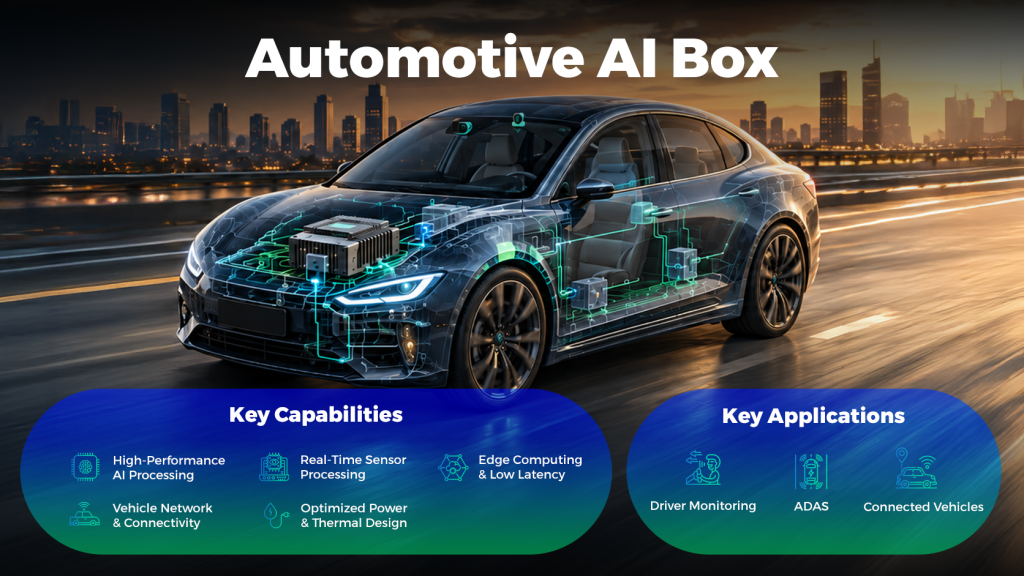
1. High-Performance AI Processing
AI applications such as object detection, lane recognition, driver monitoring, and scene understanding require significant computational resources. An automotive AI Box uses heterogeneous computing architectures to handle these workloads efficiently.
The CPU manages application logic and system operations, while GPUs and NPUs accelerate parallel computations and support neural network operations. This allows multiple AI tasks to run on a shared platform, depending on available compute capacity and memory bandwidth.
AI model optimisation techniques, including quantisation and hardware-specific acceleration, can further improve inference performance while managing power consumption and thermal constraints.
2. Real-Time Sensor Data Processing
Modern vehicles generate large volumes of data through cameras and other sensors. Processing this information efficiently is essential for intelligent vehicle applications.
An AI Box can ingest camera streams, preprocess images, execute AI models, and generate outputs such as object classifications, detection coordinates, driver attention indicators, or scene-level insights. More advanced implementations can combine information from multiple supported sensors to improve environmental perception.
Local processing reduces the need to send raw sensor data to remote servers, helping lower network usage and enabling faster responses for suitable workloads. Actual latency depends on sensor interfaces, processing capacity, model complexity, software scheduling, and the overall system architecture.
3. Edge Computing and Low-Latency Intelligence
One of the primary advantages of an automotive AI Box is its ability to execute AI workloads at the vehicle edge.
Cloud-based processing depends on network availability and communication latency, making it unsuitable as the sole processing path for many time-sensitive automotive applications. An AI Box processes supported workloads locally, enabling the vehicle to generate AI insights without waiting for a remote server.
This capability is useful for in-cabin monitoring, real-time video analytics, intelligent driver assistance, and other applications where responsiveness and connectivity independence matter.
However, applications involving safety-critical decisions require appropriate system-level safety engineering, deterministic behaviour where needed, and validated fallback mechanisms.
4. Connectivity and Vehicle Network Integration
An automotive AI Box must communicate with sensors, other electronic systems, and potentially external services. Depending on the platform design, it may support automotive Ethernet, CAN or CAN FD, USB, camera interfaces, Wi-Fi, Bluetooth, and cellular connectivity.
These interfaces enable the AI Box to receive sensor data, exchange information with vehicle systems, and transmit selected insights to cloud-based platforms.
Secure communication and access control are particularly important when connecting high-performance computing platforms to vehicle networks. Appropriate isolation, authentication, secure boot, and software update mechanisms help address cybersecurity risks.
5. Optimised Power and Thermal Management
AI workloads can impose substantial power and thermal demands, particularly when processing high-resolution camera streams or running multiple neural networks simultaneously.
An automotive AI Box must balance computational performance with energy efficiency, thermal stability, and the constraints of its installation environment. Hardware selection, PCB design, heat dissipation, memory optimisation, and workload scheduling all influence the platform’s performance.
AI model quantisation, efficient inference runtimes, and workload allocation can help reduce computational overhead without compromising the required application performance.
The platform must also be designed to operate reliably across the environmental and electrical conditions expected in automotive applications.
Key Applications of Automotive AI Boxes
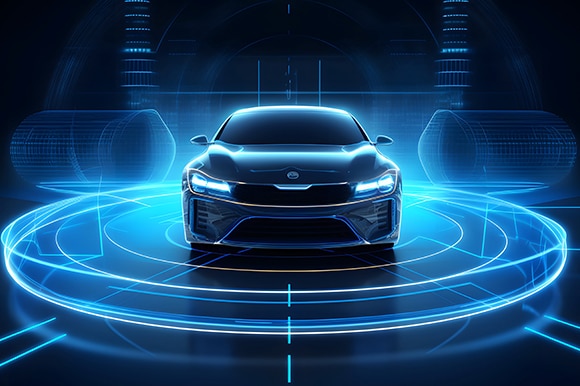
Advanced Driver Assistance Systems (ADAS): AI Boxes can support camera-based object detection, lane recognition, traffic sign recognition, and other perception workloads. They can supply processed information to the broader ADAS architecture, where vehicle-level decisions and control functions are handled according to the system design.
Driver and Occupant Monitoring: By processing in-cabin camera data, an AI Box can enable driver attention monitoring, drowsiness detection, occupancy analysis, and gesture recognition. These capabilities can improve safety and enable more personalised in-vehicle experiences.
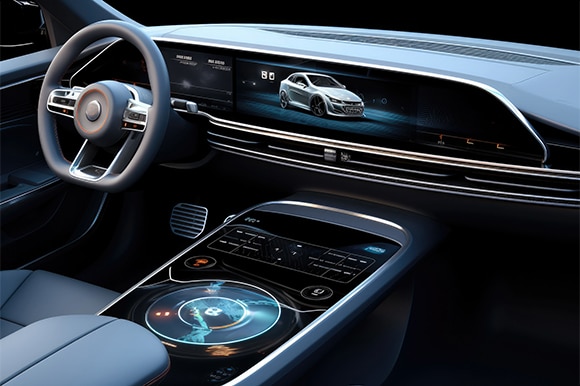
Intelligent In-Cabin Experiences: AI Boxes can support voice interaction, contextual assistance, intelligent infotainment features, and other AI-powered applications, depending on available compute resources and software integration.
Predictive Maintenance and Vehicle Analytics: An AI Box can analyse selected operating data to identify unusual patterns, detect potential anomalies, and support predictive maintenance workflows. Insights can be shared with fleet management or cloud analytics systems when connectivity is available.
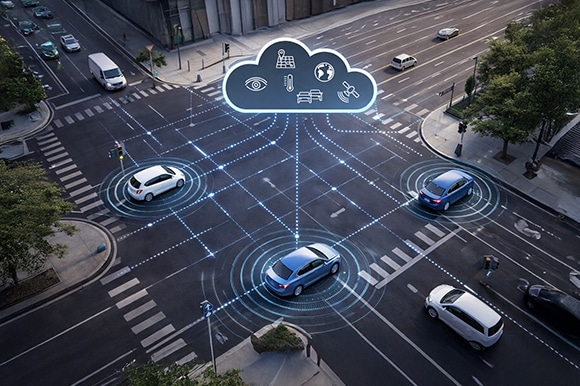
Connected and Software-Defined Vehicles: AI Boxes provide a computing foundation for deploying new AI applications and optimising existing models over time. With suitable update and security infrastructure, automakers can introduce software improvements without redesigning the complete vehicle electronics architecture.
Key Considerations for AI Box Development
Developing an automotive AI Box requires more than selecting a powerful processor. Engineers must consider AI performance, memory capacity, sensor compatibility, latency, power consumption, thermal design, and long-term software support from the beginning.
Functional safety and cybersecurity must also be addressed according to the intended application. Relevant engineering activities may include hardware and software fault monitoring, secure boot, application isolation, diagnostic capabilities, and validation against applicable automotive standards.
Additionally, the platform should support integration with existing vehicle networks and provide a scalable architecture for different vehicle segments and computing requirements. Verification under realistic workloads and environmental conditions is essential to ensure that the AI Box meets its performance, reliability, and production requirements.
VVDN’s Capabilities in Automotive AI Box Development
VVDN Technologies offers end-to-end engineering capabilities for automotive AI Box development, covering hardware design, embedded software, AI integration, and system engineering. Its expertise includes SoC-based platform design, high-speed PCB development, power management, and thermal optimisation to support high-performance, power-efficient automotive computing.
VVDN’s embedded software capabilities include Linux platform development, board support packages (BSPs), device drivers, hardware-software integration, and AI inference optimisation for supported platforms. These capabilities help enable efficient deployment of AI workloads, camera and sensor integration, and connectivity through interfaces such as CAN/CAN FD and automotive Ethernet.
Additionally, VVDN supports system integration, hardware-software validation, performance testing, and product engineering from prototyping to production transition. This integrated approach can help automotive OEMs and Tier-1 suppliers develop scalable AI Box solutions for ADAS, in-cabin intelligence, and connected vehicle applications.