
 Global
 United States
  Japan
Japan 



The way we handle network security has changed for good. For years, organizations relied on a “castle-and-moat” approach: strong perimeter firewalls and a single guarded entrance through a VPN. The rule was simple, once you were inside the network, you were trusted. But by 2026, that perimeter has effectively disappeared. With cloud applications everywhere and teams working from virtually any location, there is no longer a clearly defined “inside” to protect. This shift has made Zero Trust Network Access (ZTNA) the new standard. Its principle is straightforward: never trust, always verify. Access is granted per session, per user and per device, whether someone is in the office or at a coffee shop.
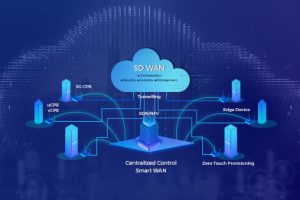
However, software alone isn’t enough. To achieve real security at scale, Zero Trust must extend to the network edge itself. That’s where Universal Customer Premises Equipment (uCPE) comes in. Increasingly, ZTNA is deployed as part of broader Secure Service Edge (SSE) and Secure Access Service Edge (SASE) architectures. Universal CPE enables multiple networking and security functions to run on a single platform, simplifying deployment and empowering service providers and ISVs to deliver managed security across distributed environments.
In a perimeter-less world, security can’t just be layered on top; it must be built in.
Table of Contents
The Limitations of Software-Only Security
Many organizations deploy ZTNA purely as a software overlay. While this can extend access control quickly, it introduces significant operational and performance constraints. Legacy infrastructure is rarely designed to handle the computational load required to decrypt, inspect and re-encrypt traffic in real time. This “encryption tax” consumes processing power and increases latency, creating what many teams experience as a hidden security tax on user performance.
There’s also a broader visibility gap. A substantial portion of enterprise environments consists of devices that cannot run ZTNA agents at all, including industrial sensors, surveillance systems and medical equipment. These unmanaged endpoints remain exposed and can become entry points for lateral movement.
To secure these assets effectively, enforcement must move closer to the source of traffic. Security controls need to reside at the network edge, embedded directly into the hardware layer. Universal CPE provides that foundation. By consolidating networking and security functions on a scalable platform, it enables enterprises, OEMs and service providers to implement Zero Trust consistently without sacrificing performance or leaving blind spots in distributed environments.
The Strategic Advantages of a Unified Architecture
Integrating ZTNA directly onto a Universal CPE platform offers several critical advantages that traditional routers cannot provide:
- Minimized Latency through Local Processing: By performing identity verification and deep packet inspection at the edge rather than backhauling traffic to a distant cloud data center, the uCPE ensures a seamless, high-speed user experience.
- Comprehensive IoT Protection: A uCPE acts as a secure gateway for the entire branch. It can “cloak” unmanaged IoT devices, granting them virtual identities and enforcing Zero Trust policies even for devices that cannot protect themselves. This enables service providers and ISVs to offer managed IoT security as part of their portfolio.
- Real-Time Threat Containment: The uCPE can isolate compromised devices and enforce security policies locally, reducing the potential for lateral movement.
- Operational Consolidation: Replacing multiple single-function appliances (firewalls, routers, VPN concentrators) with a single uCPE reduces power consumption, simplifies management and lowers total cost of ownership (TCO). This consolidation also supports multi-tenant environments, making it easier for providers and ISVs to deliver secure services to multiple clients from a single platform.
Understanding the ZTNA Technical Workflow
Effective Zero Trust requires a multi-layered security architecture where every connection is verified before access is granted. The ZTNA process typically follows a structured sequence:
- Identity Verification: When a user attempts to connect, the system authenticates their identity using enterprise identity providers such as Active Directory, LDAP directories, or multi-factor authentication (MFA). Access decisions are based on identity, device posture and contextual risk signals.
- Granular Application Access: Instead of granting access to the entire network, the user requests a specific application. An App Connector — functioning as a reverse proxy — brokers the connection. This keeps applications invisible to the public internet and reduces exposure to threats such as DDoS attacks.
- Session-Specific Encrypted Tunneling: Once authentication and policy checks are complete, an encrypted, session-specific tunnel is established between the user and the application. Each session is isolated, limiting the blast radius of any compromise and preventing lateral movement across the network.
When this workflow runs directly on uCPE hardware, OEMs, service providers and ISVs can enforce Zero Trust policies consistently across distributed environments. Processing at the edge reduces dependency on centralized cloud inspection, improving performance, minimizing latency, and extending protection to both managed and unmanaged devices.
The VVDN Advantage: Engineering Secure Networking
As a leader in designing and making advanced networking gear, VVDN Technologies provides a production-ready SD-WAN Universal CPE reference design that is the perfect home for ZTNA. Our uCPE platforms are built with high-performance processors and hardware acceleration to handle heavy encryption and threat detection without slowing down your internet.
Beyond just raw power, VVDN hardware is built with a Hardware Root of Trust, ensuring that your security software starts on a platform that hasn’t been tampered with. By using VVDN’s uCPE designs, companies get a reliable, globally compliant solution that combines the flexibility of SD-WAN with the serious security of Zero Trust. The uCPE platform also enables multi-tenant deployments and white-label solutions, making it suitable for ISVs, service providers and OEMs looking to deliver managed Zero Trust services efficiently across distributed environments.