
 Global
 United States
  Japan
Japan 


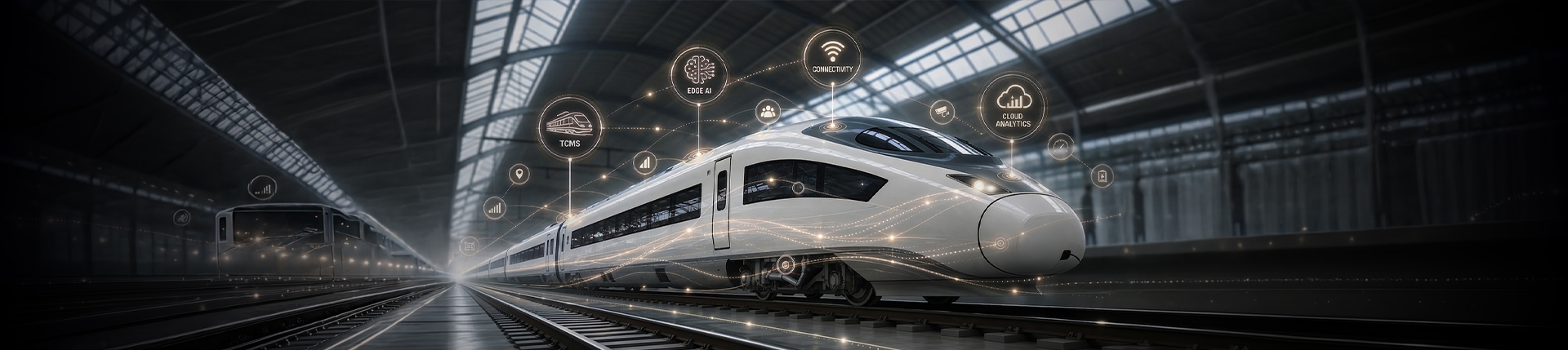
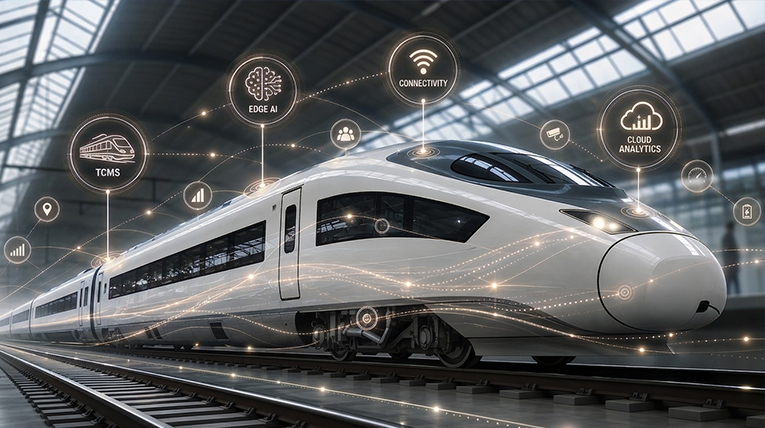
How connected onboard systems, Edge AI, secure connectivity and cloud analytics are transforming trains into intelligent, data-driven assets.
Railways are entering a new era of digital transformation. Modern trains are becoming connected, data-generating platforms capable of monitoring their systems, identifying anomalies, supporting predictive maintenance and enabling faster, data-driven decision-making.
At the center of this transformation is the Intelligent Train—a railway platform that brings together Train Control and Management Systems (TCMS), onboard systems, Edge AI, high-performance connectivity and cloud-based fleet intelligence.
The transformation is not about replacing existing railway control systems. It is about building an intelligent digital layer around them, one that can collect data across the train, process it at the right point, securely transmit relevant information across the railway network and turn it into actionable intelligence.
Table of Contents
From Connected Trains to Intelligent Trains
Modern trains already generate significant amounts of operational data through TCMS, Vehicle Control Units (VCUs), propulsion and braking systems, auxiliary systems, sensors, communication equipment and signaling subsystems. The challenge is no longer simply collecting this data, it is turning it into timely and actionable intelligence.
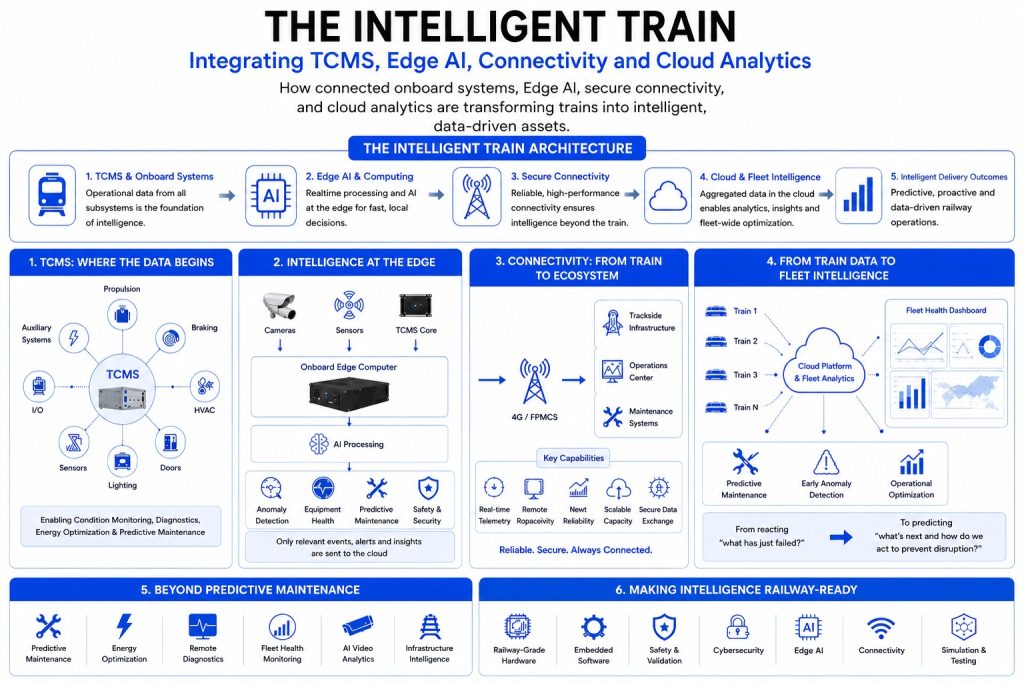
An intelligent railway architecture connects these capabilities into a continuous ecosystem. TCMS and onboard systems provide operational data, Edge AI processes critical information closer to where it is generated, secure connectivity enables data exchange and cloud platforms bring information from multiple trains together for fleet-level analysis.
Each layer builds on the previous one: onboard data becomes intelligence at the edge; relevant information is securely transmitted through the railway network and aggregated data becomes fleet-level insight in the cloud.
This creates a pathway from reactive monitoring toward condition-based, predictive and increasingly intelligent railway operations.
TCMS: Where the Data Begins
The Train Control and Management System (TCMS) is at the heart of modern rolling stock, coordinating and monitoring critical onboard systems such as propulsion, braking, auxiliary systems, driver interfaces and vehicle communications. As trains become increasingly connected, the data generated by TCMS and these onboard systems becomes a valuable resource for intelligent railway applications.
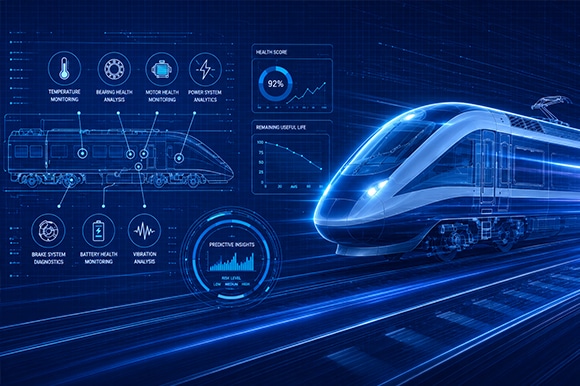
Operational parameters from propulsion and power systems can provide insights into equipment health and performance, while data from braking systems, batteries, HVAC, doors and other subsystems can provide a broader view of train condition. With the right digital architecture, this data can become the foundation for condition monitoring, diagnostics, energy optimization and predictive maintenance.
However, railway intelligence cannot be implemented like a conventional IoT solution. Railway environments demand reliability, safety, validation, environmental robustness and long operational lifecycles. Intelligent capabilities therefore need to work alongside existing railway architectures rather than replace them. This makes onboard intelligence the next critical layer.
Bringing Intelligence to the Edge
Not every decision on a train should depend on a remote cloud. A train is a moving asset operating across changing connectivity conditions, making local processing important for applications that require a fast response, continuous monitoring, or efficient use of network bandwidth.
This is where Edge AI becomes a critical part of the intelligent train architecture.
An onboard edge platform can analyze information in real time and support applications such as anomaly detection, equipment health monitoring, predictive maintenance, driver assistance, passenger safety, object and intrusion detection, track inspection and pantograph and wagon inspection. The edge can process data from multiple sources, including TCMS, sensors and vision systems.
For vision-based applications, railway-grade AI cameras, ruggedized Network Video Recorders (NVRs) and onboard edge compute platforms can work together. Cameras provide the perception layer, the NVR manages video streams and edge compute processes information locally to enable AI-based detection and decision-making.
Instead of continuously transmitting every video stream or sensor event to the cloud, relevant events, alerts, telemetry and selected information can be processed locally and transmitted upstream. The result is a more responsive architecture in which time-sensitive intelligence stays onboard, while information requiring wider analysis moves beyond the train.
Connectivity: Extending Intelligence Beyond the Train
For edge intelligence to deliver fleet-level value, it must be connected to the wider railway ecosystem. An intelligent train needs to communicate with onboard systems, trackside infrastructure, railway networks, operations centers, maintenance systems and cloud platforms.
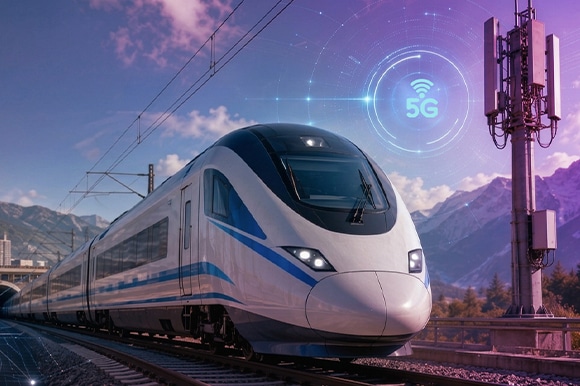
The evolution toward 5G and FRMCS (Future Railway Mobile Communication System) is creating opportunities for high-performance and mission-critical railway communications. These technologies can help connect onboard systems with railway infrastructure and digital platforms, supporting real-time telemetry, remote diagnostics, edge-to-cloud data exchange, fleet monitoring, remote software updates and connected train operations.
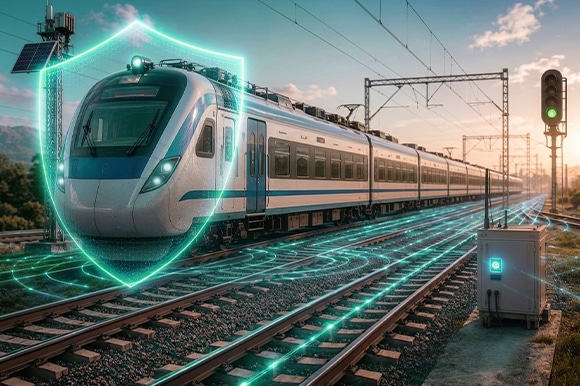
Next-generation connectivity must also work alongside existing systems, including TCMS, signaling systems, onboard communication platforms and legacy infrastructure, while addressing interoperability, reliability and cybersecurity requirements. Connectivity therefore becomes the digital backbone connecting onboard intelligence with railway operations and cloud-based fleet intelligence.
From Train Data to Fleet Intelligence
The real value of connected train data emerges when information from individual trains is aggregated and analyzed across an entire fleet. Consider a fleet of locomotives operating across different routes. Each locomotive can generate data from propulsion and traction systems, pantograph and VCB, batteries, braking systems, GPS, temperature and voltage sensors and communication equipment.
A cloud-based platform can bring this information together to provide a centralized view of fleet health and operational performance.
By comparing data across multiple trains, analytics can identify patterns and anomalies that may not be visible when monitoring a single asset. If similar abnormal behavior appears across multiple locomotives, fleet-level analytics can help identify recurring equipment issues, operating patterns, or early signs of degradation.
The maintenance conversation shifts from:
“Which train has failed?”
to:
“Which assets are showing early signs of degradation and what action should we take?”
This supports a move from reactive maintenance toward condition-based and predictive maintenance, helping maintenance teams act before potential issues affect fleet operations.
Beyond Predictive Maintenance
Predictive maintenance is only one outcome of an intelligent train architecture.
- Energy optimization can use propulsion, traction converter and auxiliary-system data to analyze energy consumption and operational efficiency.
- Remote diagnostics can provide maintenance teams with visibility into onboard equipment without waiting for a train to return to a depot.
- Fleet health monitoring can provide operators with a centralized view of asset condition and operational status.
- Meanwhile, AI-powered video analytics can add another layer of operational awareness through object detection, intrusion detection, passenger safety monitoring, track inspection and pantograph and wagon inspection.
The same digital architecture can extend beyond rolling stock to signaling, communications infrastructure and trackside assets, creating a broader railway intelligence ecosystem.
Making Intelligence Railway-Ready
Connecting systems and deploying AI is only part of the challenge. Intelligent trains operate in environments defined by vibration, shock, temperature variations, electromagnetic interference, safety requirements and long operational lifecycles.
The technology therefore needs to be integrated into a railway-grade engineering architecture that brings together hardware, embedded software, TCMS and VCU engineering, ruggedized electronics, edge computing, connectivity, AI and computer vision, cloud platforms, cybersecurity and simulation and validation.
Validation becomes particularly important as intelligent functionality becomes more deeply integrated into railway platforms. Simulation environments can replicate sensor inputs, subsystem signals, communication interfaces and operating conditions, supporting functional and performance testing, sensor and I/O simulation, communication protocol testing, subsystem emulation, fault injection, regression testing and HIL/SIL validation.
This helps identify issues earlier, increase test coverage and reduce reliance on physical rolling stock during development, which is particularly important as intelligent functions become part of safety- and mission-critical railway environments.
Building the Next Generation of Intelligent Railways
The transition from connected trains to intelligent trains is not about adopting a single technology. It is about connecting multiple engineering and digital capabilities into one continuous technology chain.
TCMS and onboard systems generate the data. Edge computing and AI turn critical data into local intelligence. Secure railway connectivity moves relevant information beyond the train. Cloud platforms aggregate and analyze information across the fleet. Analytics transforms this information into actionable insights. Engineering, cybersecurity, simulation and validation make the ecosystem railway-ready.
This is where an end-to-end engineering approach becomes important.
VVDN Technologies brings together multidisciplinary capabilities across rolling stock, TCMS and VCU engineering, signaling, railway communications and FRMCS, Edge AI and vision, digital operations, cloud platforms, cybersecurity and simulation and validation.
This enables railway OEMs and operators to address the intelligent railway as a connected engineering ecosystem, from onboard systems and embedded software to edge intelligence, connectivity, cloud analytics and fleet-level applications.
The objective is not to replace existing railway systems, but to progressively enhance them with digital intelligence.
The future of rail is therefore not simply about building smarter trains. It is about creating an intelligent digital ecosystem in which trains, infrastructure, communications, AI and cloud platforms work together to turn operational data into actionable intelligence.
That is the journey from a connected train to an intelligent railway.